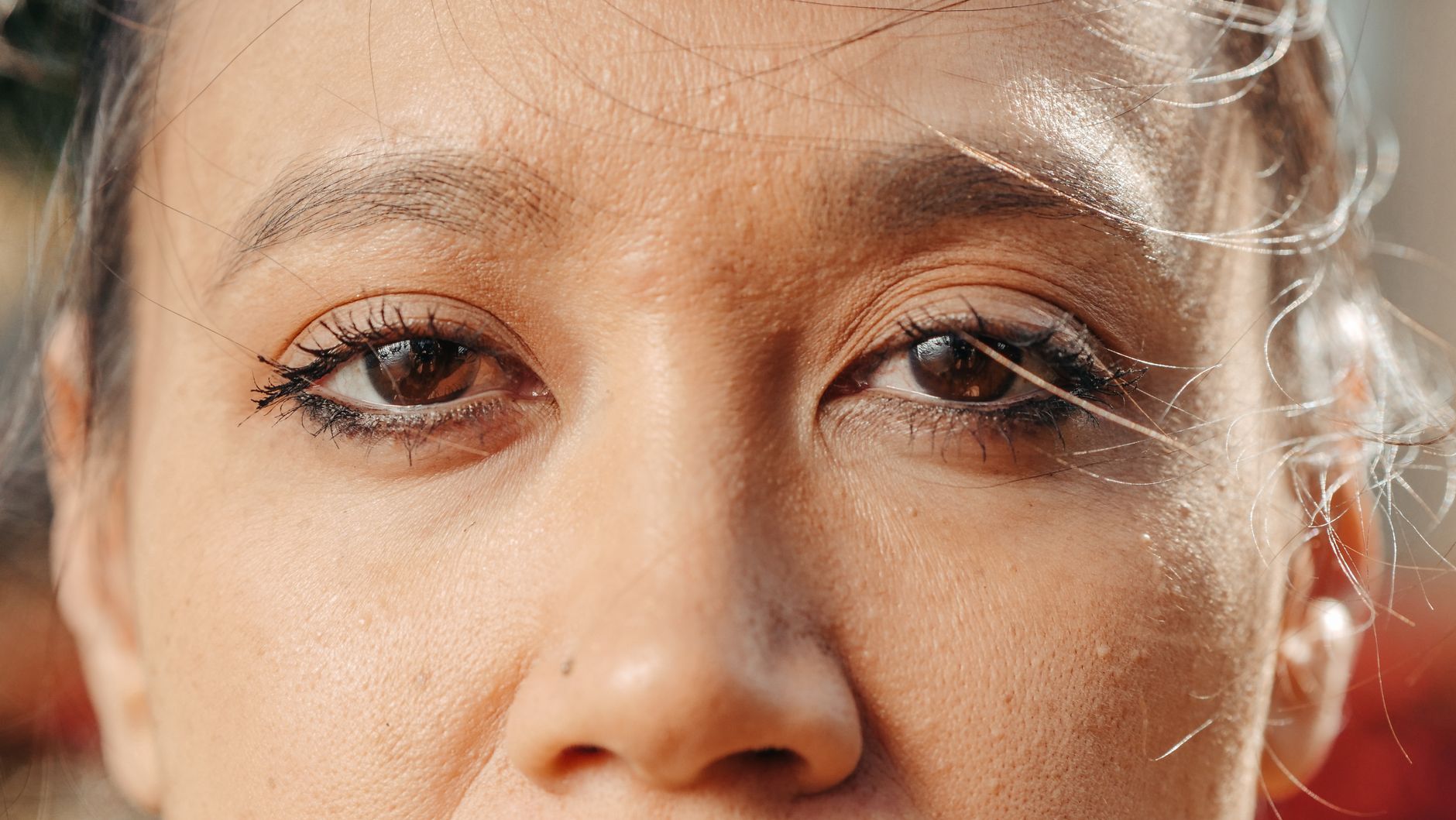

Flakes, rough patches, and fine lines can catch pigment, preventing it from forming an even film. Extra coverage piles onto those raised areas, so your nose, cheeks, or mouth can look heavier than the rest of your face.
The sections below trace texture, moisture, formula choice, and blending from cause to correction, so you can build a steadier daily complexion routine.
Uneven Texture Interrupts Foundation Coverage
A smooth base needs a thin, continuous film across your skin. Loose surface cells break that film much like crumbs beneath a sheet of paper, leaving foundation thicker on raised edges and lighter beside them.
Your foundation does not create the flakes, but it makes skin texture and flaking easier to see. A light layer reveals less texture than a dense layer pressed repeatedly into the same area.
Clinging, Caking, Pilling, and Separation Have Different Signs
Clinging: Pigment grips flakes or rough patches, which can make foundation look darker around the nostrils, chin, and mouth. Your base stays uneven because more product remains on the raised skin.
Caking: Too much product sits on the surface and gathers in fine lines. The finish can look thick or mask-like instead of flexible.
Pilling: Tiny rolls or beads form during blending. Skincare that has not settled, rubbing friction, or crowded product layers can leave those pellets across your face.
Separation: Bare-looking gaps, streaks, or patches appear as foundation pulls apart during wear. Dry zones absorb moisture unevenly, leaving pigment with less grip.
More coverage rarely solves this problem. Foundation looks patchy even after moisturizing because a thick layer has more material to catch around flakes, so your better move is a thin veil followed by small spot corrections.
Dryness, Dehydration, and Skin Barrier Stress Affect Wear
Dry skin produces less natural oil, while dehydrated skin lacks water. You can have surface shine and still see tight, patchy makeup across your cheeks.
| Skin state | What happens at the surface | How makeup can look |
|---|---|---|
| Dry skin | Your skin produces limited oil and feels rough or tight. | Foundation clings to flakes, while powder can look chalky. |
| Dehydrated skin | Your skin lacks water despite surface oil. | Foundation can look dull, creased, or uneven by midday. |
| Stressed skin barrier | Your outer layer loses water more easily and reacts more readily. | Complexion products can sting, cling, or pull apart. |
The Skin Barrier Slows Water Loss
The outermost layer of skin helps slow water loss. Ceramides are skin lipids that fill spaces between surface cells, much like mortar between bricks.
A weakened barrier lets water leave the skin faster, leaving tightness, flaking, and uneven makeup wear behind. Hot showers, strong cleansers, dry indoor air, retinoids, and frequent exfoliation can leave your face less comfortable.
You may see concealer crease beneath your eyes while foundation breaks apart beside your nose, even though both looked smooth at breakfast. Those areas move throughout the day, and smiling, facial expressions, or tissue rubbing can disturb a fragile base.
That fragility makes gentle, well-timed preparation more useful than trying to correct movement with additional coverage.
Burning, itching, cracked skin, or persistent redness calls for a pause from irritating actives. Dermatitis, eczema, or another skin condition can resemble simple dryness but needs medical evaluation.
Skin Prep Gives Pigment a Softer Surface
Water-based hydration and oil-based softness solve separate parts of the problem. Humectants such as glycerin, hyaluronic acid, and panthenol draw water toward the outer skin layer, while a hydrating moisturizer slows its escape.
Your complexion products spread with less drag across a surface that feels flexible rather than tight. The goal is comfort without a wet or slippery film beneath foundation.
A Dry Skin Makeup Routine Uses Settled Layers
- Cleanse gently: Use lukewarm water and a mild cleanser that leaves your face comfortable rather than squeaky.
- Add hydration: Use a light serum or essence containing glycerin, hyaluronic acid, or panthenol.
- Seal moisture: Follow with a hydrating moisturizer containing ceramides, squalane, or fatty acids.
- Wear sunscreen: During daylight, choose a comfortable formula that does not leave a tight, matte residue.
- Pause before makeup: Give each layer several minutes to settle until your skin feels soft rather than wet.
CeraVe Moisturizing Cream and La Roche-Posay Toleriane moisturizers use barrier-focused ingredients, though your skin does not need a particular brand. Look for a surface that feels cushioned and flexible instead of greasy or coated.
Exfoliation Works Best With Restraint
A gentle exfoliation session can lift loose flakes before a makeup day. A soft washcloth, a mild lactic acid product, or a low-strength polyhydroxy acid can smooth visible buildup for some skin types.
Stop before your skin feels raw. Frequent acids, scrubs, peeling pads, and cleansing brushes can strip a stressed surface, leaving your foundation smooth for an hour and rougher later as irritation appears.
Use exfoliation for visible loose flakes rather than a daily response to patchiness. Your skin needs a calm surface more than repeated polishing.
Formula Choice Matters Alongside Coverage
Once skincare has settled, your foundation formula becomes easier to judge. Powder-heavy, matte, and fast-setting bases pull moisture from the surface quickly, which can sharpen dry edges that prep was meant to soften.
| Formula type | Texture effect | Where it fits |
|---|---|---|
| Emollient liquid foundation | Offers slip and a flexible finish. | Useful where your skin feels rough or tight. |
| Cream foundation | Gives richer coverage with less powder. | Useful for spot coverage and dry cheeks. |
| Powder foundation | Sets fast and can grip surface texture. | Reserve it for small areas that need shine control. |
| Full-matte liquid | Dries down fast and can highlight fine lines. | Use a light hand after careful prep. |
Primer Adds Slip but Cannot Flatten Flakes
A hydrating makeup primer can soften the look of pores and add slip across dehydrated cheeks. It cannot flatten visible flakes or repair an irritated skin barrier.
Your primer belongs over settled skincare, not a wet moisturizer layer. Too much product beneath it leaves a soft film that can roll under foundation.
Silicone-based versus water-based formulas are not a strict pass-or-fail rule. A silicone-rich primer can sit smoothly under a water-based liquid foundation, and the reverse pairing can work too.
The useful signal is your own face. Rolling, beading, or separation suggests that your pairing needs fewer layers, less product, or more dry-down time.
For example, a luminous liquid foundation from Estée Lauder can wear smoothly over a thin moisturizer yet pill over a rich sunscreen added moments earlier. Product amount and settling time can matter more than the label alone.
Once compatible layers have settled, pressing rather than dragging helps preserve the surface they have formed.
Pressed-On Layers Reduce Foundation Lifting
Friction can turn a smooth base into a broken one. Repeated buffing shifts skincare, lifts foundation from dry areas, and presses pigment into lines.
Your goal is light contact with as little dragging as possible. This is how to apply foundation on dry skin without turning a small dry patch into a larger uneven area.
Small Amounts Keep Coverage Flexible
- Place product centrally: Dot a small amount beside the nose, on the cheeks, forehead, and chin.
- Press outward gently: Use damp makeup sponge pressure instead of circular rubbing across dry texture.
- Pause between layers: Let foundation settle before covering a remaining mark or discoloration.
- Spot conceal carefully: Place concealer only where foundation did not give enough coverage.
- Set with restraint: Press a tiny amount of setting powder only on areas that crease or become shiny.
A damp makeup sponge carries a little water and reduces drag, helping liquid foundation settle into your skin. Squeeze it until no water drips, since a soaked sponge can thin coverage too much and leave patchy edges.
Setting Powder Should Serve Wear
Dusting setting powder across your entire face can turn a fresh liquid base dry within minutes. Set beneath the eyes, beside the nose, or through the center of your forehead only where movement or shine disrupts wear.
Leave dry cheeks alone once they look smooth. Your foundation needs no extra powder in an area where skin texture is already visible.
A fine mist of setting spray can settle a powdery finish, but it cannot repair flakes beneath makeup. Press the surface with your sponge after the mist settles rather than rubbing it across your face.
A Small Reset Repairs One Patch at a Time
A patch beside the nose does not require removing your entire base. Start by lifting excess product before adding new product, since that breaks the thick-on-thin pattern that leaves makeup looking uneven.
A Mid-Application Repair Sequence
- Stop blending: Pause once the area begins to lift, since more rubbing spreads the break outward.
- Press away excess: Hold a clean sponge or tissue lightly against the patch.
- Add tiny moisture: Use a pinhead amount of moisturizer or a light hydrating mist on the dry spot.
- Wait briefly: Leave the area until it feels soft rather than slick beneath your fingertip.
- Rebuild lightly: Press a thin layer of foundation or concealer only across the repaired space.
Makeup separating on dry skin points back to the layers beneath it. Excess skincare leaves a slippery film, while too little moisture leaves a thirsty surface that grabs pigment.
Your routine needs enough hydration to soften texture and enough settling time to keep layers from shifting. Repeated blending after foundation has set can disturb a drying liquid base, especially around smile lines.
Persistent flakes with burning, itching, or redness are not a makeup-technique problem. Pause exfoliating acids, fragranced products, and strong retinoids until a dermatologist can assess your skin.
Final Takeaways
Patchiness begins beneath the foundation. A hydrated surface, a calm skin barrier, settled skincare, and thin pressed-on layers give pigment a smoother place to sit.
Your most useful correction is rarely more coverage. Remove excess, restore a small amount of moisture where texture appears, then rebuild that area with a light press of product.
FAQ
Why does foundation look patchy and flaky on dry skin?
Foundation looks patchy because pigment catches on flakes, rough texture, and fine lines rather than settling into an even film. Your dry areas hold more product at their edges, while nearby skin can look bare or thinly covered.
Can dehydrated skin make makeup separate or cling to texture?
Dehydrated skin can leave your foundation dull, creased, or uneven because the outer layer lacks water. A hydrating moisturizer and settled skincare give your makeup a softer surface with less drag.
Should exfoliation come before makeup on dry skin?
Gentle exfoliation can help where loose skin is visible, but harsh scrubs or frequent acid products can worsen flaking. Use a mild method, follow with moisturizer, and stop exfoliating after stinging, burning, or lingering redness.
Which primer and foundation types suit dry skin?
A hydrating makeup primer and an emollient liquid foundation or cream foundation tend to suit dry patches better than powder-heavy formulas. Your products should spread without dragging and stay flexible after they settle.
Why does setting powder make foundation look cakey or patchy?
Setting powder absorbs surface moisture and can grip dry texture, especially across cheeks and around the mouth. Keep powder limited to areas that crease or become shiny, such as beneath the eyes or beside the nose.
How can you fix patchy foundation without removing all makeup?
For how to fix patchy makeup on dry skin, press away excess product with a clean sponge or tissue, add a tiny amount of moisture, and rebuild the area with a thin layer. Rubbing over the patch can spread the break outward.