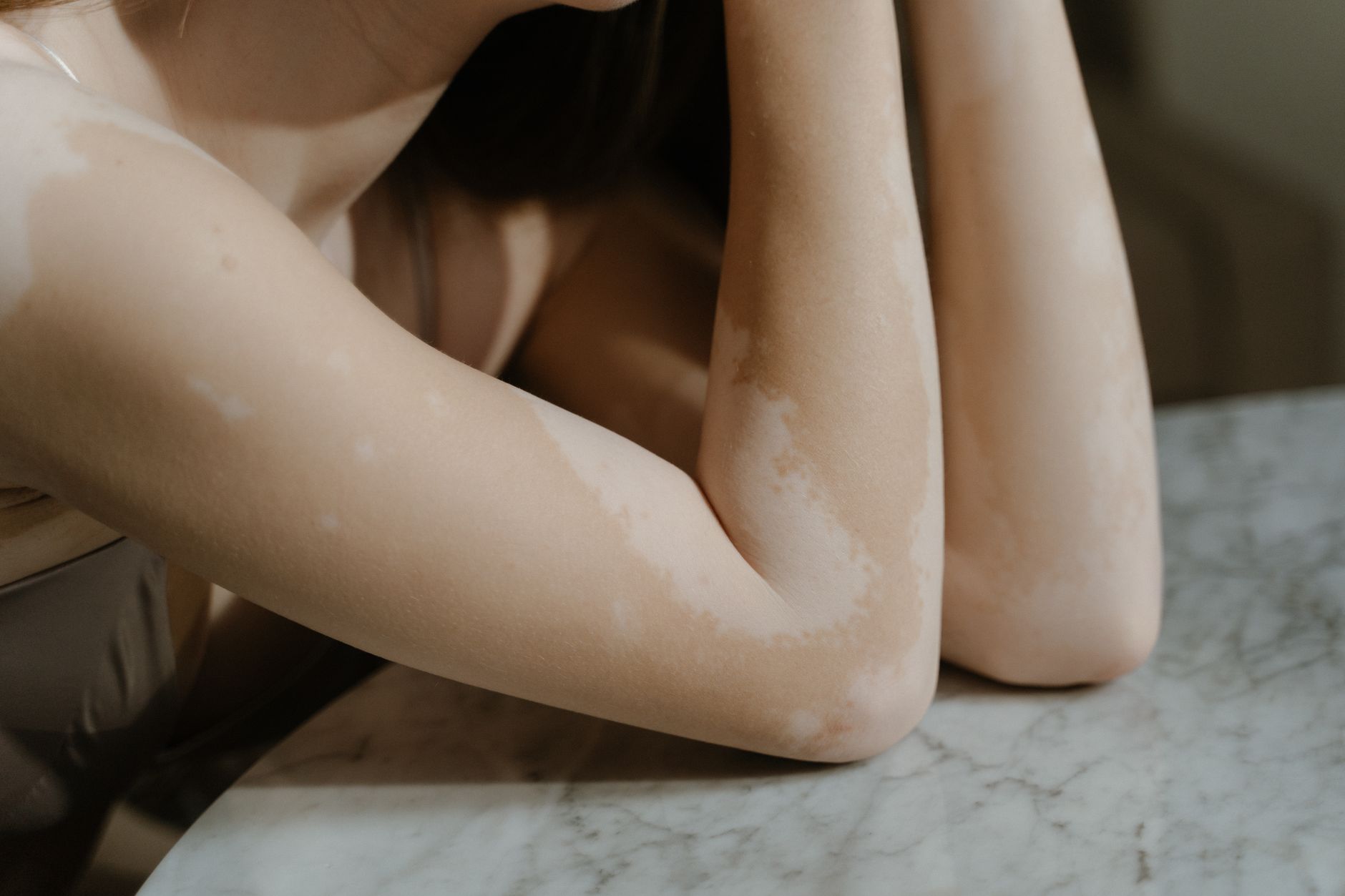

Extra or reduced melanin, lingering blood-vessel redness, or both can create visible differences in skin color. A healed acne bump may leave a brown or pink mark, while a pale patch can point to reduced pigment activity or another skin process.
Your next step depends on the mark’s color, pattern, trigger, and speed of change. The sections below explain pigment, redness, sun exposure, inflammation, hormones, daily care, and signs that call for a dermatologist.
Color Changes Start With Pigment and Blood Vessels
Melanin Shapes Much of Your Skin Color
Most visible skin color comes from melanin, the pigment produced by specialized skin cells. Cells called melanocytes produce this pigment, and your genes set a baseline level. Sun exposure and UV radiation, inflammation, hormonal changes, and skin injury can cause melanin to cluster or increase in certain areas.
Extra melanin creates tan, brown, gray-brown, or deeper brown marks. Reduced pigment creates lighter areas. The Fitzpatrick Skin Phototype Scale describes skin responses to ultraviolet radiation, yet marks can look very different across people with the same phototype.
Red Marks Do Not Always Involve Pigment
A flat pink or red mark after acne may come from visible surface blood vessels rather than melanin. This pattern is called post-inflammatory erythema, or PIE. Exercise, heat, and cool lighting can make that redness stand out more clearly to you.
Your skin can show two processes in one place. For example, a healing pimple may leave red PIE around the original site and brown post-inflammatory hyperpigmentation in the center.
When both changes linger after inflammation, separating their colors helps explain why they fade on different timelines.
| What you see | What your skin is showing | Example you might notice |
|---|---|---|
| A brown flat spot | Your skin has extra melanin in that area. | You see it after a blemish or a day outdoors. |
| A pink or red flat mark | Your surface blood vessels remain visible after inflammation. | You spot it after acne has flattened. |
| A pale patch | Your skin has reduced pigment or altered pigment activity. | You notice it against your usual skin color. |
Brown, Red, and Pale Marks Follow Different Processes
Color gives you a useful clue because brown acne marks and red acne marks fade through different biological paths. Hyperpigmentation means extra melanin, while hypopigmentation means reduced melanin. Both patterns can make your complexion appear uneven.
Inflammation Leaves Brown or Red Residue
Post-inflammatory hyperpigmentation, or PIH, follows inflammation from acne, eczema and skin inflammation, burns, cuts, or picked insect bites. During repair, your skin deposits more pigment at the affected site. That pigment may remain after the rash, wound, or blemish settles.
PIE follows a vascular path instead. Pink, red, or purplish marks reflect changes in visible blood vessels after inflammation. Pigment-focused skin care does not address every reason that redness remains. Acne scarring may include dents or raised texture, which differs from color change.
Melasma Forms Broad Facial Patches
Melasma appears as broader brown or gray-brown patches, frequently across both cheeks, the forehead, upper lip, or jawline. Sunlight, heat, and hormonal changes can deepen the pattern. You may see matching patches rather than separate individual spots.
Freckles and sunspots tend to appear as distinct marks on exposed skin. Sunspots, also called solar lentigines, reflect cumulative ultraviolet exposure. Their gradual appearance differs from a sudden spot that changes over a short period.
| Pattern affecting you | Common appearance | Likely process |
|---|---|---|
| Post-inflammatory hyperpigmentation | Brown, tan, gray, or deeper brown mark | Your skin made extra pigment after inflammation. |
| Post-inflammatory erythema | Pink, red, or purplish flat mark | Your visible blood vessels remain altered after inflammation. |
| Melasma | Broad, matching patches | Your pigment activity responds to light and hormonal shifts. |
| Sunspots | Separate brown spots on exposed skin | Your cumulative UV exposure has affected pigment cells. |
Sun Exposure, Inflammation, and Hormones Trigger Pigment Changes
Sun exposure and UV radiation signal melanocytes to make more melanin, making them a major answer to dark spots on face causes. UV light can darken existing marks, deepen freckles, and contribute to melasma and sunspots. Your fading mark may become darker without a visible sunburn.
Daily Light Exposure Keeps Pigment Active
Exposure adds up on the face, chest, forearms, and backs of your hands. A short drive, a walk beside reflective water, or time near a bright window can add to your UV exposure. Reflective surfaces such as snow, sand, and water increase the light reaching skin.
The American Academy of Dermatology advises broad-spectrum sunscreen with SPF 30 or higher on exposed skin. Broad-spectrum formulas cover UVA and UVB rays. Both forms of ultraviolet radiation contribute to visible color changes and photoaging.
Inflammation Can Leave a Lasting Mark
Acne, cuts, burns, insect bites, eczema, and contact rashes can start a pigment response. Your skin may look healed on the surface, yet pigment produced during inflammation can remain visible for months. Deeper skin tones can develop more persistent PIH because inflammation can stimulate melanin production strongly.
- Acne lesions: An inflamed blemish can leave PIH or PIE after swelling settles.
- Scratching eczema: Repeated rubbing adds inflammation and can darken affected areas.
- Heat injury: A minor facial burn from a styling tool can leave a brown mark after redness fades.
- Insect bites: Picking at a bite extends irritation and raises the chance of a lasting mark.
- Contact rashes: An irritated area can leave uneven color after itching stops.
Hormonal Shifts Affect Pigment Signals
Pregnancy and some hormonal medications can trigger or worsen melasma. During hormonal shifts, pigment cells can become more responsive to light. You may need both strict sun habits and medical guidance for broad, recurring patch patterns.
Years of ultraviolet exposure can bring age spots into view even after decades of even-looking skin. That gradual process differs from a new mark that grows, bleeds, or changes color over weeks.
Daily sunscreen matters after inflammation. Your fading mark can darken again with unprotected UV exposure, even without visible burning.
Irritation, Medicines, and Illness Can Change Skin Color
The inflammation linked to acne can also begin with an aggressive skin-care routine. Strong acids, frequent scrubs, retinoids introduced too fast, and friction from masks or shaving can disrupt your skin barrier. A damaged barrier leaves skin more reactive and more prone to visible redness or pigment change.
Barrier Damage Can Prolong Discoloration
Your skin barrier is the outer layer that limits water loss and blocks irritants. Stinging, burning, flaking, or tightness after a product signals irritation rather than progress. Those signs matter because repeated irritation can deepen uneven skin tone and discoloration.
Vitamin C, retinoids, and exfoliating acids can fit a pigment-focused routine, yet layering several active products at once can leave you red and uncomfortable. Start with one active product, watch your skin for burning or rash, and stop products that cause persistent irritation.
Widespread Changes Need Medical Context
Some medicines and medical conditions alter pigment across broad areas or create unusual patterns. Your clinician needs the medicine name, start date, dose changes, and a clear description of where the color change began. Photos can help show whether the area is spreading.
Light patches have several possible causes. Vitiligo involves loss of functioning pigment cells, while fungal or inflammatory conditions can change surface color and texture. A pale patch with fine scale does not suggest the same process as a smooth, sharply defined white area.
Those visual differences matter because care that soothes irritation may do little for pigment loss or another underlying condition.
New widespread color changes with fatigue, swelling, scaling, or a recent medicine change call for a medical visit rather than stronger skin-care products.
Daily Care Depends on the Pattern Behind the Mark
Once you identify the color pattern, restraint becomes part of skin care. Your routine should reduce new inflammation before it targets pigment. This approach matters because active acne or eczema can keep adding fresh marks while older spots fade.
Daily Habits Reduce New Darkening
Shade, hats, and protective clothing reduce the ultraviolet load reaching your skin. Sunscreen works best as part of that broader routine, especially around midday and near snow, sand, or water. Your habits matter every day because pigment cells respond to repeated exposure.
- Wear SPF 30: Put broad-spectrum sunscreen on exposed skin each morning and reapply during extended outdoor time.
- Leave spots alone: Avoid picking pimples, scabs, and bites so your skin has less inflammatory damage.
- Cleanse gently: Choose a cleanser that leaves your skin comfortable rather than tight or squeaky.
- Reduce friction: Avoid abrasive scrubs, harsh washcloths, and repeated rubbing over dark marks.
- Add actives slowly: Introduce one active ingredient at a time so you can identify irritation.
Pattern-Specific Care Limits Product Overload
Control active acne or eczema before focusing heavily on leftover marks. Your pigment burden can keep growing while inflammation continues. That cause-and-effect pattern explains why multiple brightening products rarely solve an active breakout cycle.
Hydroquinone can reduce pigment production, yet strength, duration, and skin response need medical direction. A dermatologist can discuss prescription retinoids, azelaic acid, chemical peels, or procedures suited to your pattern and skin color. Your safest option depends on the diagnosis, active inflammation, and prior irritation.
Natural skin care has a narrow role. You can limit sun exposure, avoid scrubbing, and use a bland moisturizer. Lemon juice, baking soda, and rough exfoliation can irritate skin and deepen visible discoloration.
Gentle care can prevent further irritation, yet it cannot determine whether a newly evolving mark is harmless.
New or Changing Marks Need Dermatologic Evaluation
A spot that changes over weeks rather than months needs more than a mirror check. Your dermatologist can inspect color, borders, texture, and depth with dermoscopy, a tool that magnifies skin structures beyond what your eye can see.
Signs That Merit a Timely Visit
Skin cancer can appear as a new or changing pigmented mark, not only as a classic dark mole. Changes in a mole’s size, shape, color, feel, bleeding, or healing pattern deserve professional assessment. Your concern should rise with rapid change rather than waiting for a spot to become painful.
- Fast growth: Seek care for a new spot that grows or shifts color over a short period.
- Uneven borders: Have an irregular, jagged, or poorly defined dark mark examined.
- Mixed colors: Seek assessment for brown, black, red, blue, or white variation in one lesion.
- Bleeding or pain: Book prompt care for a spot that bleeds, hurts, crusts, or fails to close.
- Spreading patches: Seek evaluation for broad light areas, scaling, swelling, or widespread new discoloration.
Consistent Photos Can Show Change
Take photos in the same room, from the same distance, and in similar daylight every few weeks. Your photo record can show a stable mark, spreading patch, or color shift more clearly than memory alone.
Write down acne flares, sun-heavy days, new products, hormonal changes, rashes, and medicine starts beside each photo. That history gives your clinician useful clues and helps separate uneven skin tone and discoloration from a more urgent change.
Final Thoughts
Color alone does not identify the cause. Sort a mark into extra pigment, lingering redness, or pigment loss, then remove the trigger that keeps it active. Sun protection and a calm routine fit most dark-mark plans, while rapid change, pain, bleeding, spreading patches, or unexplained light areas belong with a dermatologist.
FAQ
What causes uneven skin tone and dark spots?
Sun exposure, acne, eczema, cuts, burns, hormonal changes, friction, and irritating products can leave darker areas. Your skin responds to inflammation or UV radiation with extra melanin production, and that pigment can remain after the original trigger settles.
Can sun damage cause lasting skin discoloration?
Yes. Repeated ultraviolet exposure can create freckles and sunspots, deepen melasma, and darken old acne marks. Your skin may fade some color over time, yet cumulative sun exposure can leave spots that persist without consistent protection and professional guidance.
What is the difference between melasma and hyperpigmentation?
Hyperpigmentation is a broad term for excess melanin that causes darker skin areas. Melasma is one form of hyperpigmentation that appears as broad, matching patches. You may see melasma darken with sun exposure, heat, pregnancy, or hormonal medications.
How can you even out your skin tone naturally?
You can wear broad-spectrum SPF 30, seek shade, avoid picking, reduce friction, and keep your routine gentle. Those habits limit fresh inflammation and UV-driven darkening. A dermatologist should assess stubborn patches, pale areas, or a pattern that keeps spreading.
At what point should you see a dermatologist for skin discoloration?
See a dermatologist for a new spot that changes quickly, has uneven borders or mixed colors, bleeds, hurts, or does not heal. Your visit also matters for rapid spreading, widespread pale patches, scaling, swelling, or color changes that began after a medicine.