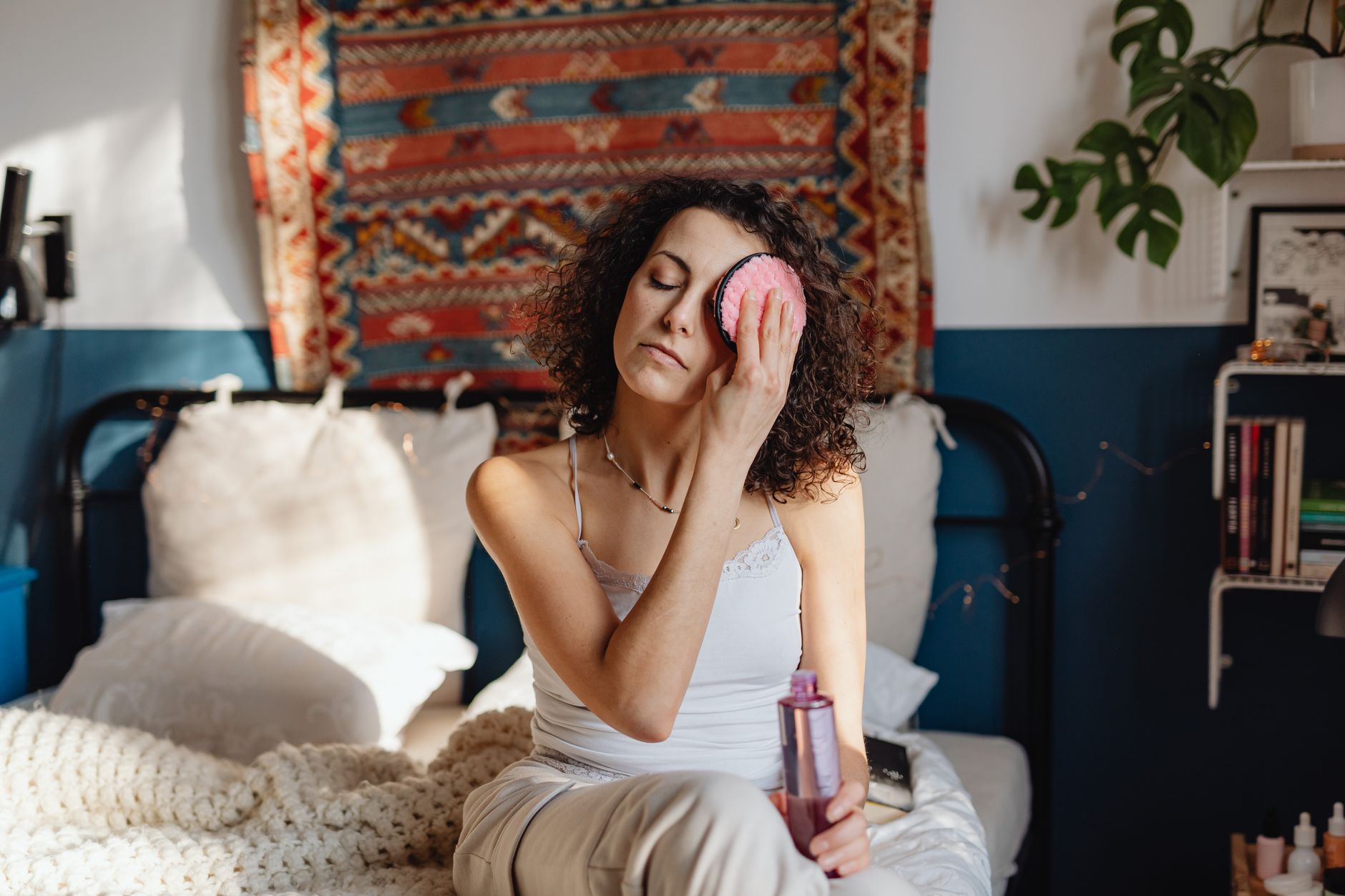

A suitable remover dissolves pigments after brief contact time, allowing them to rinse away with lukewarm water instead of being scrubbed off. Your face should feel clean, soft, and calm afterward, not hot, tight, or squeaky. Pressure, product residue, and water temperature usually shape that result.
This covers gentle makeup removal for sensitive skin, including micellar water, cleansing balm, waterproof mascara, double cleansing, and skin-barrier care for dry or reactive faces.
A Barrier-First Approach to Makeup Removal
Redness after cleansing rarely comes from makeup alone. Friction, hot water, repeated washing, and sensitizing formulas strip surface oils and leave your skin barrier more exposed. That outer layer acts like mortar between bricks, holding water in while blocking irritants.
Your goal is clean skin without the stretched feeling around your mouth, cheeks, or eyelids. Makeup removal works through dissolving: loosen pigments and oils, lift them with little pressure, rinse residue away, then moisturize while skin is still damp.
Comfort Marks a Suitable Routine
Burning, visible flushing, flakes, and lasting tightness show that your routine is too harsh for your current skin tolerance. A cleanser may lift every trace of foundation and still leave your face irritated. Guidance from the American Academy of Dermatology favors gentle skin care for sensitive skin, including less rubbing.
Skin that feels “squeaky clean” has not reached a higher level of clean. That sound and sensation can mean too much oil and moisture were removed from your skin’s surface.
Sleeping in makeup leaves residue along pores, lashes, and the lip line for hours. That buildup may contribute to clogged pores, eye discomfort, and irritation. For your routine, start with the least force needed for the makeup you wore.
Matching Removal Methods to Makeup Load
The amount and type of makeup on your face determines the starting method. A light layer of concealer needs less lifting power than full-coverage foundation, mineral sunscreen, setting spray, and waterproof eye makeup worn together.
Cleansing oil and cleansing balm dissolve sunscreen, sebum, waxes, and pigments before you start wiping. Because the formula does much of the loosening, your fingertips need less pressure. That tradeoff suits dry, sensitive, or reactive skin that turns red after repeated swiping.
| Makeup load | Low-friction starting method | Useful follow-up |
|---|---|---|
| Light concealer and powder | Micellar water on soft cotton pads | Rinse or use a mild cleanser when skin feels filmy |
| Sunscreen and everyday complexion makeup | Cleansing balm or cleansing oil | Rinse thoroughly with lukewarm water |
| Full-coverage foundation and setting products | Oil cleanser or balm on dry skin | Use one mild water-based cleanser |
| Waterproof mascara and long-wear lipstick | Oil-based eye or lip remover | Finish with a clean damp pad around edges |
| Mineral sunscreen with makeup | Cleansing balm with a longer massage | Use a mild cleanser where residue remains |
Micellar Water Works Best for Light Makeup
Suspended cleansing particles make this water-based cleanser suited to light makeup, small corrections, and low-effort nights. Bioderma Sensibio H2O is a familiar example of this format. Your skin may feel better after a water rinse, especially around the nose and jaw where residue may feel slick.
Micellar water is safe for sensitive skin for some routines, yet residue bothers reactive skin in others. Heavy makeup, waterproof mascara, and mineral sunscreen leave more material behind than a few swipes can lift. A gentle rinse or fragrance-free cleanser gives your face a cleaner finish without repeated pad use.
Fragrance, essential oils, drying alcohols, and harsh surfactants are common sources of stinging for compromised skin. Patch testing gives your skin a small trial before full-face use. Place a small amount near your jaw for several uses, then watch for burning, bumps, itching, or redness.
- Choose fragrance-free formulas. A fragrance-free cleanser removes one common source of stinging for dry, reactive, or eczema-prone skin.
- Favor rinseable oils. Emulsifying balms turn milky with water, helping you lift makeup without a washcloth.
- Limit makeup wipes. Wipes suit travel emergencies, yet rough fabric and repeated swiping can irritate your cheeks.
- Check the finish. A greasy film after rinsing signals that your remover needs more water or a mild follow-up cleanse.
A makeup remover for dry sensitive skin should leave your face comfortable rather than coated or tight. Product texture matters less than your response after rinsing. Stinging that continues after water contact points toward a formula or technique that does not suit your skin.
A Low-Friction Routine for Face Makeup and Sunscreen
After matching your remover to the makeup load, your technique becomes the next line of protection. Dry hands matter because oil and balm cleansers grip makeup before water weakens their hold. Start on dry skin, then add water only after pigments begin to loosen.
- Wash hands first. Start with clean, dry hands so makeup, sunscreen, and facial oil do not mix with dirt from your fingertips.
- Spread remover lightly. Smooth cleansing balm or oil over your forehead, cheeks, chin, and jaw with light pressure.
- Pause for 15 seconds. Give long-wear base makeup about 15 seconds to soften before moving around stubborn areas.
- Add water slowly. Wet your fingertips with lukewarm water and massage until the oil turns milky, a process called emulsifying.
- Rinse every edge. Use several splashes of lukewarm water around the hairline, nostril creases, chin, and jawline.
- Cleanse only for residue. Follow with a mild water-based cleanser after heavy makeup, water-resistant sunscreen, or a lingering oily film.
Hot water strips more surface lipids and can deepen dryness or visible redness. Keep the water comfortably lukewarm. Your hands should move as though you are smoothing lotion onto a bruise, not polishing a countertop.
A Follow-Up Cleanser Has a Limited Role
Double cleansing means an oil or balm cleanser followed by a mild water-based cleanser. It does not mean two rounds with the same foaming wash. CeraVe Hydrating Facial Cleanser and Vanicream Gentle Facial Cleanser are examples of mild formats that rinse residue without harsh scrubbing.
Light makeup and minimal sunscreen do not always need two cleansing stages. Your dry or easily irritated skin may do better with one thorough rinseable balm cleanse. Check a clean damp cotton pad afterward; no visible makeup transfer suggests the removal step is complete.
For how to remove makeup without makeup wipes, a rinseable balm or cleansing oil gives you more slip and less fabric friction. Cotton pads still have a role around eyes and lips, where targeted contact time loosens pigment. Keep pad use limited to those small areas rather than wiping your entire face.
Waterproof Eye and Lip Makeup Needs Contact Time
Eyelid skin is thin, and lashes can break under repeated side-to-side rubbing. Waterproof mascara resists water through waxes and film-forming ingredients. Water alone leaves you pressing harder instead of lifting pigment more effectively.
Soaking Loosens Stubborn Pigment
Soak a soft cotton pad or reusable pad with a compatible remover, then press it over your closed eye for 10 to 20 seconds. Your closed lid shields the eye while the remover softens mascara, liner, and shadow near the lash roots.
Use short downward motions from lash roots toward tips. Switch to a fresh pad instead of rubbing the same stained surface back and forth. For lips, hold the pad against color, then wipe outward from the center toward each corner.
Persistent eye redness, stinging, blurred vision, or lash breakage means the product or technique needs to change. Stop using the remover around your eyes and seek medical advice for severe symptoms.
The best way to remove eye makeup without rubbing is to let the remover sit before you wipe. An oil-based eye remover or balm is a practical choice for how to take off waterproof makeup gently. Your goal is for pigment to slide away rather than force your eyelid skin through repeated passes.
After targeted removal lifts stubborn pigment, the remaining film,not habit,determines whether a second cleanse earns its place.
Double Cleansing Depends on Leftover Residue
Residue is the deciding factor after a balm or oil cleanse. A follow-up wash clears leftover sunscreen, heavy complexion makeup, or a rich oily finish. Too much cleansing leaves dry skin burning before moisturizer reaches it.
| Your situation | Single cleanse | Double cleansing |
|---|---|---|
| Light makeup and low sunscreen wear | Enough with a rinseable balm or gentle cleanser | Not needed unless residue remains |
| Dry, flaky, reactive skin | Favors fewer cleansing steps | Reserve for visible leftover makeup |
| Full-coverage makeup and water-resistant sunscreen | Can leave film or pigment behind | Useful with a mild water-based cleanser |
| Clogged-pore concerns | Works for lighter makeup days | Helps lift oily residue without scrubbing |
Your skin gives the final answer after rinsing. A calm face with no visible makeup transfer means the job is done. Tightness, stinging, or dry patches after the follow-up cleanser show that the extra wash costs more than it gives.
When a second cleanse leaves skin uncomfortable, recovery starts with recognizing that the routine has exceeded its benefit.
Calming Skin After Cleansing and Spotting Trouble Signs
Freshly cleansed skin loses water quickly, especially in dry indoor air. Pat with a soft, clean towel rather than rubbing. Smooth a bland moisturizer over slightly damp skin to slow water loss and reinforce the skin barrier.
Recovery Needs Fewer Active Products
Skip exfoliating acids, retinoids, facial scrubs, and strong acne products on a night that ends with stinging or redness. Your face does not need a punishment routine after a difficult removal session. A plain moisturizer with glycerin, ceramides, petrolatum, or dimethicone is a calmer next step.
Gentle, fragrance-free skin care is commonly used for eczema-prone skin, especially during a flare. Guidance from the National Eczema Association also points toward simple routines. Keep your routine narrow during irritation: gentle cleanser, lukewarm water, soft towel, and bland moisturizer.
- Burning after rinsing. Check for fragrance, alcohol, essential oils, hot water, or cleanser left near your hairline.
- Redness near eyes. Use more soak time and less wiping, then stop using eye products that sting on contact.
- Flakes around the mouth. Reduce washing pressure and smooth moisturizer over damp skin right after patting dry.
- Post-removal breakouts. Rinse balm carefully, then use a mild follow-up cleanser on makeup-heavy nights.
- Persistent rash or swelling. Stop the suspected product and seek medical advice, especially around the eyes.
Fragrance-free does not mean irritation-proof, and a heavy balm does not suit every acne-prone face. Remove makeup without irritating skin by changing one factor at a time, such as water temperature, remover texture, or follow-up cleansing. Your skin’s response becomes clearer with a single change rather than several at once.
What to Remember
Clean makeup removal should feel quiet: makeup softens, residue rinses away, and your skin settles instead of protesting. Match the remover to what you wore, give waterproof pigment time to loosen, keep water lukewarm, and stop at one cleanse unless residue remains.
Your skin barrier benefits more from patience than scrubbing. Remove makeup without irritating skin through less pressure, cleaner rinsing, and prompt moisturizer use. That approach also gives you a clearer signal about which formulas leave your face calm.
FAQ
What is the gentlest way to remove makeup from sensitive skin?
The gentlest method uses a fragrance-free cleansing balm, cleansing oil, or micellar water suited to your makeup load. Use light pressure and lukewarm rinsing. Your skin should feel comfortable afterward, with a mild cleanser reserved for heavy sunscreen, visible residue, or makeup that still transfers onto a damp pad.
Can micellar water irritate sensitive skin?
Fragrance, alcohol, preservatives, or residue left after wiping can trigger irritation in sensitive skin. Choose a simple fragrance-free formula and use soft cotton pads. Rinse your face after use when it feels filmy, and stop using a formula that leaves persistent burning or redness.
How do you remove waterproof mascara without rubbing your eyes?
Soak a cotton pad with oil-based eye remover or cleansing balm, hold it over your closed eye for 10 to 20 seconds, then wipe downward. Use a fresh pad for remaining pigment. Your lashes and eyelid skin face less stress than they would with repeated side-to-side rubbing.
Should you wash your face after using makeup remover?
A follow-up wash helps after heavy makeup, water-resistant sunscreen, oily balm residue, or clogged-pore concerns. Light makeup can come off fully with a rinseable balm or a micellar routine followed by water. Your skin’s comfort and the absence of residue should guide that choice.
Are makeup wipes bad for sensitive skin?
Repeated rubbing from the fabric and residual cleansing liquid can make wipes a poor fit for sensitive skin. Keep them for travel or emergencies. At home, cleansing balm, cleansing oil, or micellar water used with soft pads gives your skin a lower-friction option.