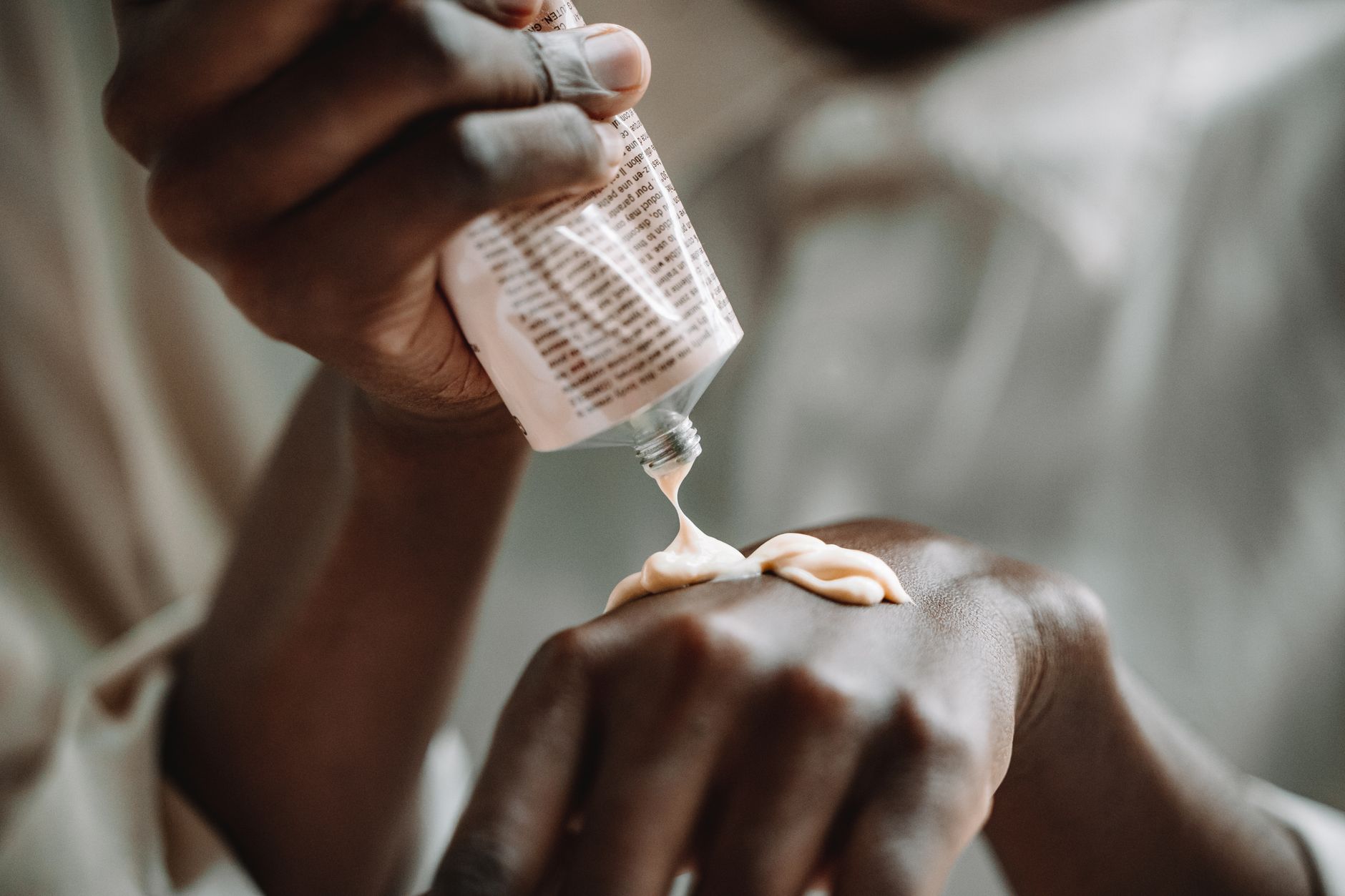

Texture, amount, and layering should match whether skin is dry, oily, combination, or sensitive. Spread a thin film over slightly damp skin after cleansing, then place sunscreen over it each morning. That approach helps limit surface water loss without leaving your face tight, shiny, or irritated.
The sections below cover ingredient roles, skin-type clues, daily layer order, and practical fixes for pilling, stinging, greasy residue, and breakouts in your routine.
Moisturizer Slows Surface Water Loss
Water leaves bare skin throughout the day, especially after cleansing, showering, wind exposure, or dry indoor heat. Moisturizer does not place water deep into your skin. Instead, it slows transepidermal water loss, the movement of water out through your outer skin layer.
Your skin barrier works like a brick wall. Skin cells act as bricks, while lipids between them act as mortar. A suitable moisturizer keeps that surface flexible, so your face feels less tight after washing and makeup sits more evenly.
Three ingredient groups handle separate jobs
Humectants draw water toward the surface, emollients smooth rough spaces between skin cells, and occlusives leave a light film that slows evaporation. Dry skin tends to feel more comfortable with all three roles in the same formula, while oily skin may prefer a lighter balance.
| Ingredient group | Role on the skin | Common examples |
|---|---|---|
| Humectants | Draw water toward the outer skin layer | Glycerin, hyaluronic acid, urea |
| Emollients | Smooth rough texture between skin cells | Ceramides, squalane, fatty alcohols |
| Occlusives | Slow water loss at the surface | Petrolatum, dimethicone, mineral oil |
Oil and dehydration are separate skin features. Your T-zone may look glossy while your cheeks feel tight because surface oil does not show how much water your skin retains. That distinction explains why a light moisturizer still has a place after a foaming cleanser or acne medicine.
Texture and Ingredients Should Match Your Skin Type
The finish left on your face gives you a practical clue. A cream that disappears into dry cheeks may sit like a film across an oily forehead, so texture matters alongside the ingredient list.
Dry skin benefits from richer layers
Dry skin produces too little surface lipid to stay comfortable for long. Creams and ointments with glycerin, ceramides, plus petrolatum or dimethicone give your skin humectant, emollient, and occlusive coverage. CeraVe and Cetaphil offer ceramide-focused creams, though your skin’s response matters more than a brand name.
To moisturize dry skin properly, press a richer formula onto slightly damp skin soon after washing. A thin extra layer around flaky nose corners or the mouth may work better than one thick coat across your full face.
Oily, combination, and sensitive skin need distinct finishes
Light gels and lotions suit oily skin because they spread without a waxy finish. Hyaluronic acid and glycerin add water-binding support without the coated feel some rich creams leave behind. Neutrogena and La Roche-Posay sell lightweight formats, though no formula behaves the same way on every face.
- Oily skin: Pick a gel or fluid lotion that leaves your skin comfortable rather than slick.
- Combination skin: Place richer cream on dry cheeks and lighter lotion across your forehead, nose, and chin.
- Sensitive skin: Favor fragrance-free skincare with a short ingredient list and fewer botanical extracts.
- Acne-prone skin: Try a noncomedogenic moisturizer, while watching how your pores respond over time.
Noncomedogenic labeling means a formula was made with clogged pores in mind. It does not promise that your skin will stay clear. Give a new moisturizer two to three weeks unless burning, swelling, rash, or a sharp breakout flare appears sooner.
Once a formula proves comfortable, its position in the routine determines whether it layers smoothly rather than pills.
Daily Layer Order Helps Each Product Sit Properly
A moisturizer holds onto some water left after cleansing, so fully dry skin misses part of that benefit. Your face should feel slightly damp rather than dripping. Excess water can thin the product and make even coverage harder to achieve.
Morning layers move from light products to sunscreen
When to apply moisturizer in skincare routine depends on the product type, yet the basic morning order stays steady: cleanse, layer water-based serum or medicine, spread moisturizer, then finish with sunscreen. Sunscreen belongs on top because it needs an even surface film across exposed skin.
- Cleanse gently: Rinse away sweat, oil, and leftover nighttime product without leaving your skin squeaky-tight.
- Layer serum: Smooth on a water-based serum or prescribed skin medicine that your skin tolerates.
- Spread moisturizer: Cover your face and neck while the skin still holds a little surface moisture.
- Finish with sunscreen: Cover exposed facial skin with a broad-spectrum sunscreen in an even layer.
Moisturizer with SPF may feel convenient, yet coverage depends on spreading enough product across your hairline, ears, jawline, and neck. A separate sunscreen gives you more room to cover those areas evenly after your moisturizer settles.
Nighttime layers leave room for irritation control
Retinoids, benzoyl peroxide, and salicylic acid may leave your skin dry during an adjustment period. Place moisturizer on either side of those products based on comfort and label directions. For sensitive skin, a moisturizer layer followed by retinoid and another light moisturizer layer may soften the dry feel.
Persistent burning is not a skin-care hurdle for you to push through. Stop the suspected product and seek dermatologic advice after swelling, blistering, or a rash that does not settle.
A Thin Layer Covers the Face and Neck More Evenly
A heavy blob does not make your skin barrier stronger. It raises the chance of makeup slipping, pilling, or a coated finish under sunscreen. Your target is full coverage from a thin layer that settles within a short time.
Clean fingertips and gentle pressure reduce friction
How much moisturizer should I use depends on formula texture and face size, though a pea-sized amount is a useful starting point for a fluid lotion. Thick creams may need a little more. Your neck needs a small amount as well, especially after washing.
- Warm between fingertips: Rub the product lightly between clean fingers for two or three seconds.
- Dot broad areas: Place small touches across your forehead, cheeks, nose, chin, jawline, and neck.
- Spread outward gently: Glide from the center of your face toward the hairline without pulling at skin.
- Press dry zones: Pat a little extra formula onto flaky cheeks or skin around your mouth.
- Pause between layers: Leave about one minute before sunscreen, makeup, or a richer nighttime layer.
Comfort gives you one of the clearest signals. Your skin should feel flexible, calm, and smooth after a few minutes. Tightness points toward too little moisture or an irritating formula, while a wet-looking face points toward too much product or a texture that is too rich for that area.
Those visual cues often vary across the face, making a single amount or texture less useful than targeted application.
Zone-Based Layers Help Mixed Skin Feel Balanced
The same jar does not need to cover every part of your face in the same way. Zone-based layering gives dry cheeks more cushioning while keeping an oilier T-zone comfortable.
Dry and combination skin respond well to targeted coverage
After a shower, pat your face instead of scrubbing it, then spread moisturizer before the surface feels fully dry. That timing slows surface water loss. For example, cream on cheekbones and lighter lotion around the nose can suit skin that feels dry yet clogs easily in the center.
Cold weather can shift your needs. A lotion that felt comfortable in July may leave your mouth area or eyelids tight in January. Add a light extra layer only where scaling remains rather than coating your full face in ointment.
Oily and sensitive skin benefit from slower product changes
Oily skin still needs water retention, particularly after acne cleansers remove surface lipids. Keep your layer light and watch changes over several days. A breakout after a new product deserves attention, but not every blemish comes from moisturizer.
Sensitive skin may react to fragrance, essential oils, acids, or several new products introduced together. Add one formula at a time and keep the rest of your routine steady. The National Eczema Association highlights fragrance avoidance as a useful starting point for skin that irritates easily.
Layering Adjustments Address Pilling, Greasiness, and Stinging
Small white rolls on your cheeks are product pilling rather than dead skin. They form when layers do not settle together or too much product sits on the surface. Silicone-rich primer, sunscreen, and thick cream can roll together under finger pressure.
Small changes solve common surface problems
- Use less product: Cut your moisturizer amount in half, then add more only where skin still feels dry.
- Wait between layers: Leave about one minute between serum, moisturizer, sunscreen, and makeup.
- Limit heavy overlap: Skip duplicate silicone-heavy products that can roll together under your fingers.
- Shift textures seasonally: Keep richer creams for dry zones, nighttime, cold weather, or temporary barrier discomfort.
- Track new reactions: Add one new product at a time so your skin gives you a clearer signal.
A greasy finish points toward less product or a lighter gel-lotion, not skipping moisturizer. Persistent stinging is different from a brief feeling around freshly shaved or over-exfoliated skin. Stop a suspected irritant when discomfort lasts beyond a few minutes or redness grows.
Breakouts and severe symptoms need clear limits
Worsening acne has several possible sources, including hair products, makeup, hormone shifts, mask friction, and a moisturizer that does not suit your skin. Stop the newest suspected formula, return to a bland fragrance-free moisturizer, and seek dermatologic advice for painful cysts, widespread rash, or ongoing irritation.
Harsh scrubbing and drying acne products can worsen irritation by disturbing the skin barrier. The American Academy of Dermatology advises gentle skin care for acne-prone skin. How to apply moisturizer for different skin types becomes clearer once you judge shine, flakes, comfort, and breakouts as separate signals.
Steady Moisture Comes From Texture, Amount, and Timing
Your moisturizer should leave your skin calm and flexible rather than dry, smothered, or burning. Start with a thin layer on slightly damp skin, match texture to each zone, and place sunscreen on top during daylight hours.
That quiet pattern gives your skin barrier steady conditions without piling heavy products across areas that do not need them. Keep an eye on your cheeks, T-zone, mouth area, and neck rather than judging your whole face by one patch of shine or dryness.
FAQ
Should moisturizer be applied to wet or dry skin?
Spread moisturizer over slightly damp skin after cleansing or bathing. Your face should not be dripping wet because excess water can thin the product and make it slide around. Damp skin gives humectants and occlusives surface water that they help hold in place.
How much moisturizer should I apply to my face?
Start with a pea-sized amount for a light lotion, then spread it across your face and neck in a thin film. Your formula, face size, and dry patches can change that amount. Add a small extra touch to flaky spots rather than placing a thick coat everywhere.
Do people with oily skin need moisturizer?
Yes, oily skin still loses water and may feel dehydrated after acne cleansers or active products. Choose a lightweight gel or lotion that feels comfortable on your face. Skipping moisturizer may leave your skin tight while surface oil stays visible.
What is the correct order for serum, moisturizer, and sunscreen?
A water-based serum goes on clean skin first, followed by moisturizer and broad-spectrum sunscreen during the day. Your sunscreen stays on top because it needs a continuous surface film. At night, leave sunscreen out and follow the directions for your active product.
How often should I moisturize my face?
Moisturize after cleansing in the morning and at night when your skin tolerates that pattern. Your face may need another light layer after swimming, washing, cold wind, or a drying acne product. Persistent tightness points toward a texture, amount, or cleanser choice that needs adjustment.
Which moisturizer ingredients suit sensitive skin?
Fragrance-free formulas containing glycerin, ceramides, petrolatum, dimethicone, or hyaluronic acid suit many sensitive-skin routines. Your skin can react to any ingredient, so introduce one new formula at a time. Stop using it after persistent stinging, rash, swelling, or itching.