
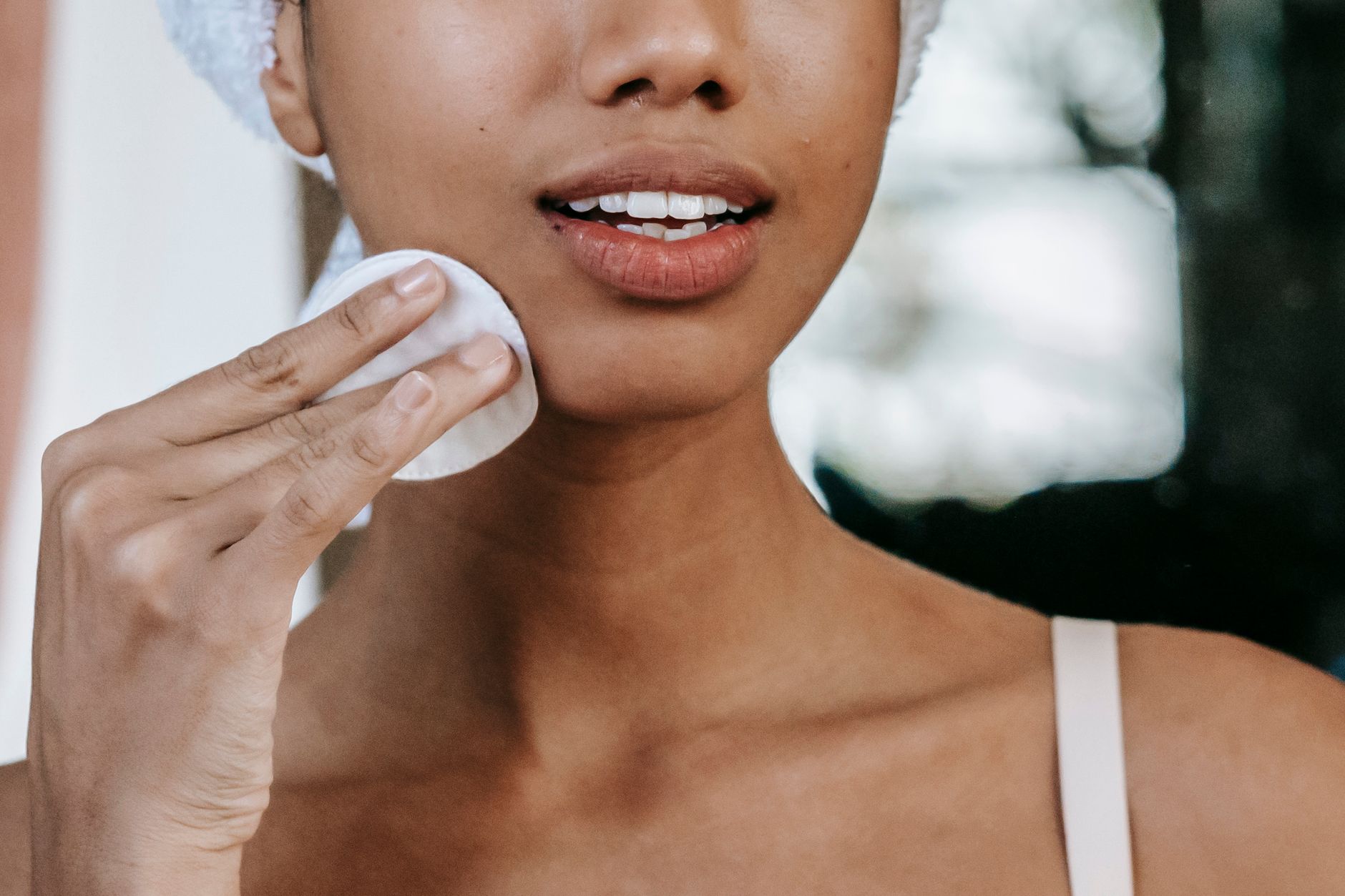

A gentle daily routine protects the outer layer that holds water in and limits contact with irritants. Gentle cleansing, moisturizer, and broad-spectrum sunscreen help your skin stay comfortable while hot water, harsh cleansers, and layered acids can leave it tight or stingy.
This overview covers barrier function, visible stress signals, ingredient roles, and a low-irritation face and body routine for dry, reactive, or acne-medicine periods.
The Barrier’s Job in Healthy Skin
Your skin’s outermost layer is the stratum corneum. Flattened skin cells form its “bricks,” while fats between those cells form the “mortar.” Together, these parts limit irritant entry, allergen contact, and excess water loss from your body.
Water loss reveals barrier strain
Water moves outward through skin throughout the day. This process is called transepidermal water loss (TEWL), and it rises after the outer layer becomes disrupted. Higher TEWL can leave your face tight after cleansing, your hands rough after dishwashing, or your cheeks flaky under makeup.
Comfortable skin does not need to feel coated. It needs enough water plus enough structure to keep that water near the surface. Your skin relies on intact cells, natural moisturizing factors (NMFs), and lipids such as ceramides, cholesterol, and fatty acids.
Lipids keep the surface flexible
Ceramides are fats found between skin cells. Cholesterol and fatty acids work beside them, helping the surface stay flexible rather than cracked. Your skin microbiome, the community of microbes on the surface, also functions better in a stable, low-irritation setting.
That structure explains why how to maintain a healthy skin barrier is less about collecting products and more about reducing repeated stress. Your discomfort can begin before obvious peeling appears, especially after surface fats and water drop at the same time.
For example, a face can feel fine in the morning yet sting after an evening double cleanse, acid toner, and retinoid. Each step may seem mild alone. Together, they can place more pressure on the stratum corneum than your skin can handle that night.
Signals That Point to Barrier Stress
Stinging from a moisturizer that felt comfortable last month is a useful clue. Barrier stress can make water, sweat, sunscreen, or a familiar serum feel sharp on contact. Your skin does not need stronger exfoliation in response to that sensation.
Symptoms deserve a closer look
- Tightness after washing suggests water and surface lipids have been removed faster than your skin can replace them.
- Fine flakes can appear around your nose, mouth, eyebrows, or acne-prone areas despite oiliness elsewhere.
- Burning or stinging after bland products can point to an irritated outer layer rather than a need for more exfoliation.
- Red, itchy patches can follow friction, fragrance exposure, shaving, or repeated use of strong active ingredients.
- New product sensitivity can mean your skin has less tolerance for ingredients that caused no issue before.
The signs of a damaged skin barrier can overlap with eczema, rosacea, acne, irritant contact dermatitis, contact allergy, and infection. Dryness after cold wind or a long flight can pass quickly, while persistent burning, scaling, itching, or redness calls for more caution.
Oil does not prove your barrier is intact. Your forehead can look shiny while your cheeks sting, especially during benzoyl peroxide, retinoid, or drying acne-cleanser use.
Your face can produce oil while the upper layers lack water. That dehydrated, oily pattern can tempt you to cleanse harder, but more detergent can remove additional surface lipids and extend the cycle.
Watch for a pattern rather than judging one isolated bad-skin day. You may see symptoms after a hot shower, after shaving, or after adding a new exfoliant. The timing can help you identify which part of your routine deserves a pause.
Common Sources of Barrier Damage
Heat and detergent can lift protective lipids from the surface. A hot shower may feel soothing, yet scrubbing with a washcloth, cleansing twice after a light workout, or using a foaming cleanser that leaves your face squeaky can push that loss further.
Daily habits can strip surface lipids
| Source of stress | What happens at the surface | Your lower-irritation adjustment |
|---|---|---|
| Hot water | Surface fats rinse away more readily. | Use lukewarm water for face washing and bathing. |
| Abrasive scrubs | Friction disrupts the outer layer. | Skip grains, brushes, and rough washcloth pressure. |
| Strong cleansers | Detergents remove oil and leave tightness. | Choose a gentle cleanser and rinse thoroughly. |
| Picking or shaving | Small surface injuries add inflammation. | Use a sharp razor, light pressure, and hands-off care. |
A sharp razor matters because a dull blade can drag across the surface instead of cutting hair cleanly. Your shaving routine also benefits from light pressure and a lubricating product that reduces friction. Stop shaving over cracked or raw patches until the area settles.
Layered actives can exceed tolerance
Alpha hydroxy acids (AHAs) loosen dead surface cells, while beta hydroxy acids (BHAs) move into oily pores. Retinoids change skin-cell behavior, and benzoyl peroxide can be drying. Each ingredient has a role, but several active products in one night can lead to over-exfoliation and irritation.
Fragrance sensitivity, dry indoor air, wind, sun exposure, and rapid product changes add pressure from other directions. A new retinoid, acid toner, and facial scrub are three separate stressors landing on the same thin outer layer.
Space out changes so your skin has a clearer adjustment period. You can introduce one active product, then keep the rest of your routine steady for several uses. A return of stinging, flakes, or redness points to a frequency that is too aggressive for your current tolerance.
Once irritation is no longer being provoked, moisture-binding and lipid-supporting formulas can help skin recover.
Ingredients That Support Hydration and Protection
After major triggers are removed, moisturizer can restore comfort by adding water, smoothing roughness, and slowing water loss. Ingredients that support the skin barrier work in different ways, so a formula does not need a long ingredient list to be useful for you.
Three ingredient groups do different jobs
| Ingredient group | Examples | Role for your skin |
|---|---|---|
| Humectants | Glycerin, hyaluronic acid, urea | Draw water into the outer skin layer. |
| Emollients | Squalane, dimethicone, fatty alcohols | Soften rough texture and smooth dry edges. |
| Skin-identical lipids | Ceramides, cholesterol, fatty acids | Help replenish the lipid mixture between skin cells. |
| Occlusives | Petrolatum, mineral oil, dimethicone | Slow water loss from the skin surface. |
Humectants work well beneath moisturizer because they draw water toward the stratum corneum. Glycerin has a long history in basic moisturizers, while hyaluronic acid can feel lighter on your face. Neither takes the place of emollients and occlusives that soften the surface and slow TEWL.
Texture should fit your routine
Petrolatum is a strong occlusive, and a thin layer can help cracked hands, lips, or dry cheek patches feel less exposed. A heavy ointment can feel uncomfortable over acne medicines or in humid weather, so your preference matters alongside the ingredient list.
CeraVe, Vanicream, and La Roche-Posay make moisturizers with different textures and ingredient combinations. Your response matters more than a brand name: less sting, fewer flakes, and a comfortable finish suggest the formula fits your skin.
Fragrance is another practical tradeoff. A scented moisturizer can feel pleasant, yet fragrance compounds can irritate reactive skin. Your simplest choice during a flare is a bland moisturizer with familiar ingredients and no added scent.
A Minimal Routine for Repair and Maintenance
Fewer steps leave fewer chances for irritation. A skin barrier repair routine can stay short for several weeks after burning or flaking begins. Your aim is a calm baseline rather than a complicated schedule.
Morning care protects a stable surface
- Rinse gently Use lukewarm water, or use a gentle cleanser only after your skin feels oily or coated.
- Moisturize damp skin Press moisturizer onto slightly damp skin within a few minutes of washing.
- Cover exposed areas Use broad-spectrum sunscreen on your face, neck, ears, and other exposed skin.
- Limit friction Pat with a soft towel rather than rubbing your face dry.
Daily broad-spectrum sunscreen helps limit ultraviolet-related inflammation and damage to barrier components. Your sunscreen can also serve as your daytime moisturizer when it feels comfortable and does not sting. A separate moisturizer can sit underneath sunscreen during dry weather or on flaky areas.
Evening care keeps the routine quiet
- Remove buildup Cleanse gently after sunscreen, makeup, sweat, or visible grime.
- Skip scrubbing Leave exfoliating pads, facial brushes, and rough cloths out of your routine.
- Choose complete moisture Pick a formula with humectants, emollients, and occlusives that feels comfortable on your skin.
- Cover dry spots Press a small amount of petrolatum over lips or cracked areas as needed.
Apply moisturizer soon after bathing because damp skin gives humectants and occlusives water to hold near the surface. Your clearest progress markers are less sting, fewer flakes, and less tightness after cleansing, not the number of products on your shelf.
This is also the practical answer to how to repair a damaged skin barrier: stop piling on stress while restoring moisture and lipids. You do not need to chase tingling, peeling, or a squeaky-clean finish. Comfortable skin is the useful signal here.
That comfort becomes a practical benchmark for deciding when to maintain the routine or seek professional guidance.
Maintaining Progress and Knowing When Care Is Needed
Calmer skin gives you a starting point for active ingredients. How long does skin barrier repair take depends on the trigger, the degree of irritation, an underlying skin condition, and whether the aggravating product has been paused.
Return to actives slowly
Wait until your skin feels settled before bringing back a retinoid, AHA, BHA, or benzoyl peroxide. Use one active product on one night, then leave several nights for gentle cleansing and moisturizing. Stinging or renewed redness means your skin is not ready for that frequency.
Retinol does not need to leave your routine permanently, but pause it during burning, peeling, or rawness. Your acne, dark spots, or fine lines will not benefit from pushing an irritated surface through more exposure.
Start with the active that matters most to your skin goal. You can leave exfoliating acids aside while reintroducing retinoids, or do the reverse. One variable at a time gives your skin a clearer pattern and makes setbacks easier to trace.
Persistent symptoms need medical attention
Seek dermatology care for cracking, substantial pain, swelling, oozing, a spreading rash, or symptoms that do not settle after likely irritants are removed. Those signs can point beyond a disrupted barrier and deserve an in-person assessment.
Patch testing gives your skin a smaller trial before a new product reaches your whole face. Put a small amount on the inner arm or behind the ear for several days. Stop use after itching, redness, swelling, or a rash appears.
Your dermatologist can assess eczema, rosacea, contact allergy, or infection that resembles barrier stress. This approach aligns with guidance from the American Academy of Dermatology and the National Eczema Association.
Do not restart several active products at once. A single change gives you a clearer answer about what your skin tolerates and what brings back irritation.
What to Remember
Your skin barrier stays steadier through repetition, not intensity. Use lukewarm water, a gentle cleanser, a moisturizer with water-binding and protective ingredients, and broad-spectrum sunscreen. That quiet routine gives your skin room to regain comfort while a slow return to stronger products protects the progress you have made.
How to maintain a healthy skin barrier comes down to noticing your skin’s response before irritation becomes severe. You can keep the routine simple, pause products that sting, and seek dermatology care for pain, swelling, oozing, or persistent redness.
FAQ
What are the signs of a damaged skin barrier?
Tightness, dryness, flaking, itching, redness, burning, and stinging after once-comfortable products can signal a damaged skin barrier. Your skin can also look oily or break out while feeling dehydrated and sensitive, particularly during acne-medicine use.
How can you repair your skin barrier naturally?
You can lower irritation with lukewarm water, less scrubbing, a gentle cleanser, regular moisturizer, and daily broad-spectrum sunscreen. Plant-based ingredients are not required, and fragrance from botanical extracts can still irritate your skin. The goal is steady hydration with fewer irritants.
How long does it take for a damaged skin barrier to heal?
Mild dryness can settle within days after the trigger is removed and moisturizer is used consistently. More severe irritation can take weeks, especially alongside eczema, rosacea, allergy, frequent exfoliation, or continued exposure to retinoids, benzoyl peroxide, and harsh cleansers.
What ingredients help repair the skin barrier?
Glycerin and hyaluronic acid add water to the outer layer, while emollients soften rough texture. Ceramides, cholesterol, and fatty acids help restore lipid structure. Occlusives such as petrolatum slow transepidermal water loss, which can reduce dryness and tightness for your skin.
What skincare ingredients should you avoid during barrier irritation?
Set aside abrasive scrubs, strong acid peels, exfoliating pads, fragranced products, and several active ingredients used on the same night. Your skin may also react to a cleanser that leaves a squeaky feeling. A gentler routine can reveal whether those products were driving the irritation.
When should you see a dermatologist for persistent irritation or redness?
Seek dermatology care for cracking, substantial pain, swelling, oozing, a spreading rash, or redness that continues after likely irritants are removed. Your clinician can check for eczema, rosacea, contact allergy, infection, or another condition that needs more than routine changes.