
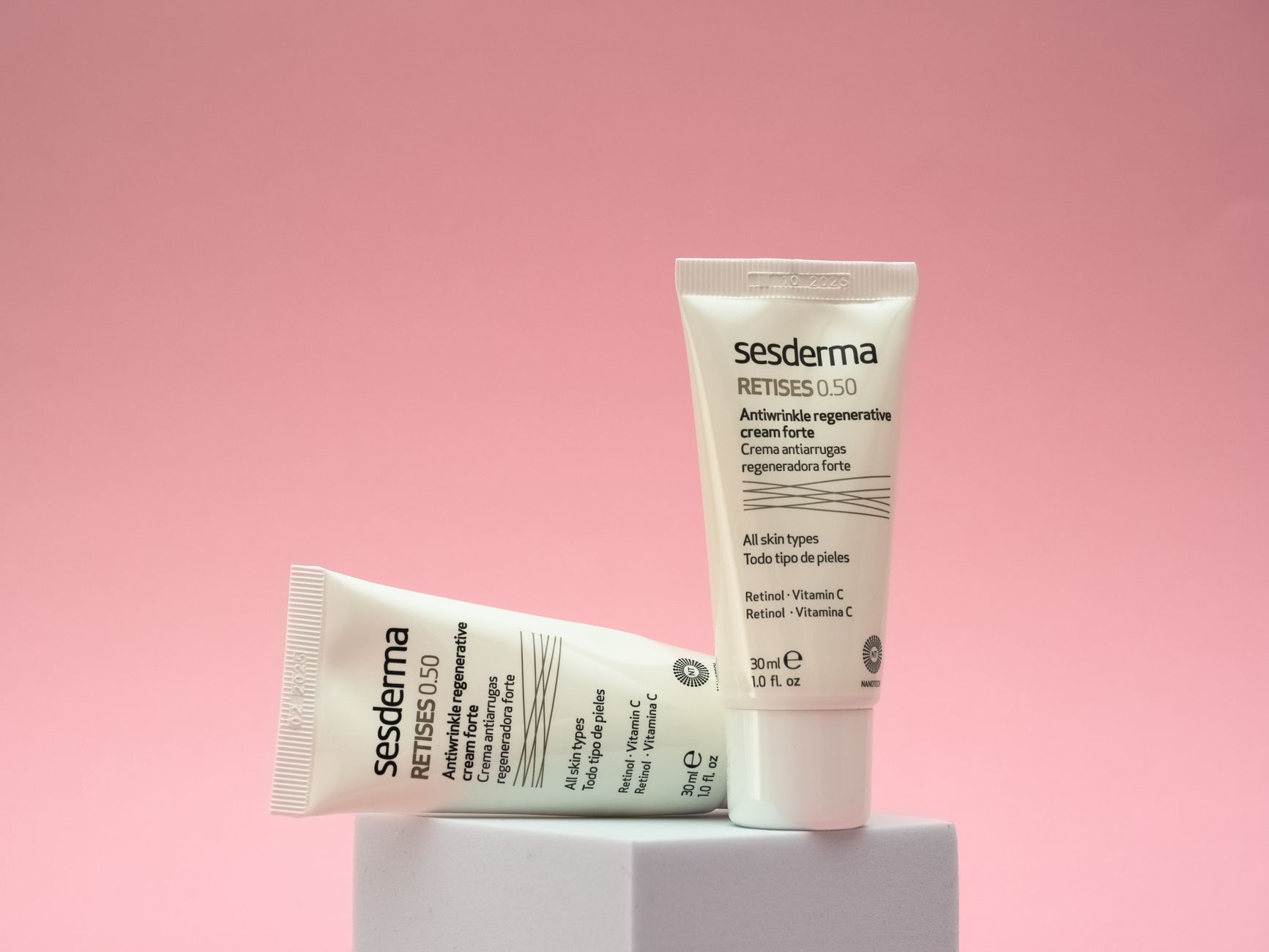

Both are nonprescription vitamin A derivatives that reach retinoic acid through different conversion paths. Retinal, also called retinaldehyde, needs one skin conversion, while retinol needs two. That chemical gap affects strength, the pace of visible change, and your chance of skin irritation.
You’ll get a practical path through texture, uneven tone, acne-prone skin, fine lines, formula design, and a gradual schedule suited to your tolerance.
Vitamin A Derivatives Share a Retinoid Family
Vitamin A includes prescription tretinoin and cosmetic ingredients sold without a prescription. Retinoids influence skin cell turnover, which can smooth rough texture, clear clogged pores, and soften the look of uneven tone over time. Your skin converts each form differently before skin cells can respond.
Retinol and retinal appear in serums, creams, and emulsions, but they are not interchangeable labels. Retinal is another name for retinaldehyde. Both belong to the retinoid family, yet retinal sits closer to retinoic acid, the active form that skin cells recognize.
| Ingredient | Place in the vitamin A pathway | Meaning for your routine |
|---|---|---|
| Retinol | Converts to retinal, then retinoic acid | Your skin completes two conversion steps before activity begins. |
| Retinaldehyde | Converts directly to retinoic acid | Your skin completes one conversion step, which can produce a stronger response. |
| Tretinoin | Retinoic acid itself | Your skin receives the active form through a prescription medication. |
The pathway explains why front-label wording can mislead you. The Ordinary sells retinol in oils and emulsions, while Medik8, Avène, and Naturium sell retinal formulas. Your decision should rest on the ingredient path, your tolerance, and the rest of your routine.
Retinal Reaches Retinoic Acid Through One Fewer Step
Retinol follows a longer conversion route
Skin enzymes turn retinol into retinal and then into retinoic acid. Retinal begins one step closer to retinoic acid. In many formulas, yes, because less conversion is required before skin cells receive the active form.
Your skin does not convert every molecule at the same rate. Age, skin barrier condition, concentration, formula design, and the vehicle carrying the ingredient all shape the response. A carefully formulated retinol cream can feel stronger than a poorly stabilized retinal serum.
Packaging and delivery shape the real response
Air and light degrade retinoids, so opaque pumps and aluminum tubes matter. Encapsulation releases an ingredient more slowly and can soften the sharp exposure linked to redness. Percentage alone does not tell you how a formula will feel.
For example, a 0.05% retinal cream in an airless pump can suit your skin better than a higher-strength retinol oil that leaves your cheeks tight. The difference between retinol and retinal includes chemistry, but concentration, packaging, and supporting ingredients shape what happens on your face.
Those formulation details help explain why conversion speed does not translate neatly into faster visible results.
A higher percentage does not automatically produce a better outcome. Your skin gets more from a retinoid you can use steadily than from a strong formula that leaves it inflamed for days.
Shared Skin Changes Take Weeks and Months
Both ingredients influence surface renewal
Retinoic acid changes signaling in skin cells through repeated exposure. That activity can help with fine lines, wrinkles, rough texture, hyperpigmentation, and acne-prone skin. Collagen production and visible photoaging changes move more slowly than dryness or flaking.
Retinal skincare benefits can appear sooner than changes from retinol, yet neither ingredient changes your skin overnight. You can spot dryness within several uses, while texture and tone shifts need steady use across weeks or months.
- Weeks 1 to 4: Your skin can feel drier, smoother, or slightly flaky as it adjusts to the new active ingredient.
- Weeks 4 to 8: Small changes in clogged pores, rough patches, and surface brightness can become easier for you to see.
- Months 2 to 3: Consistent use can bring clearer texture and a more even-looking tone alongside daily sunscreen.
- Months 3 to 6: Fine lines and photoaging concerns need sustained use before visible changes become clearer.
Progress rarely moves in a straight line. A temporary acne flare can occur as existing congestion reaches the surface, though painful breakouts that continue deserve professional advice. Your routine should protect the skin barrier instead of chasing speed every night.
Skin Irritation Is the Main Trade-Off
Adjustment has a recognizable pattern
Dryness, flaking around the nose, redness, stinging, and burning can appear during the opening weeks. Retinoids alter surface-cell behavior, and skin unaccustomed to that shift can lose comfort before it settles into a stable rhythm.
You can feel a stronger response from retinal because it reaches retinoic acid with less processing. Still, retinal does not cause more irritation in every case. A low-strength, buffered retinal product can feel calmer than a high-strength retinol formula used too frequently.
Persistent discomfort calls for a pause
Mild, brief dryness can be part of adjustment. Sharp burning, swelling, cracking, rash-like redness, or irritation that continues after reduced use points to a damaged barrier or a poor match for your skin. Stop the product and speak with a dermatologist or clinician.
Don’t push through pain. Retinoid irritation is not proof that a product is working. Your face should return to a comfortable baseline between uses, without lingering sting from plain moisturizer or water.
That recovery pattern is the practical signal for matching product strength to both goals and tolerance.
Avoid retinoids on sunburned, windburned, or visibly raw skin. Wait until your barrier feels comfortable again before restarting at a lower frequency.
Skin Goals and Tolerance Point to Different Starting Options
Retinol offers a slower entry point
A cautious start gives your skin room to adjust. Retinol or retinal for beginners does not have one fixed answer, but retinol is a practical opening option for highly reactive skin, dry skin, or concern about peeling.
Your budget can matter here too. Retinal formulas need careful stabilization and can cost more, while retinol appears in a wider range of products. A modest retinol product used two nights weekly can serve you better than a retinal serum left unused.
Retinal suits established retinoid tolerance
Retinal can fit your routine after your skin already tolerates retinol or another nonprescription retinoid. It also fits goals centered on faster visible changes in texture, uneven tone, or acne-prone skin, provided your barrier stays calm.
| Your situation | Starting point | Reason |
|---|---|---|
| Your skin reacts to several active ingredients | Retinol | A slower conversion path gives your skin more room for a gradual introduction. |
| You tolerate retinol several nights weekly | Retinal | Your skin has retinoid experience, so a stronger nonprescription option can fit. |
| Your priority is acne-prone texture and clogged pores | Either, based on tolerance | Consistency matters more than pursuing the strongest formula. |
| Your skin barrier feels dry or reactive | Pause or choose gentler care | Active retinoids can worsen discomfort on compromised skin. |
In a retinol vs retinal decision, retinol suits cautious beginners and reactive skin. Retinal suits someone with established tolerance who wants a stronger nonprescription route. Neither suits a period of active irritation, because your skin needs recovery before another vitamin A product.
A Gradual Routine Limits Barrier Stress
Start with one vitamin A product
Use one retinoid product rather than a retinol cream plus a retinal serum. Apply it at night on dry skin, because damp skin can increase penetration and make stinging more likely. A pea-sized amount covers the face; extra product does not produce faster progress.
- Begin twice weekly: Space your retinoid nights two to three days apart during the opening two to three weeks.
- Use dry skin: Wait until your face is fully dry after cleansing before spreading your chosen formula.
- Add moisturizer: Place moisturizer before or after the retinoid based on the buffering your skin needs.
- Limit acids: Keep glycolic acid, lactic acid, salicylic acid, and scrubs out of the same evening during adjustment.
- Wear sunscreen daily: Use broad-spectrum SPF 30 or higher each morning to reduce UV-related irritation and photoaging.
You can move from two nights weekly to every other night after your skin stays comfortable. A plain ceramide moisturizer can soften the routine. Your neck, eyelids, and corners of the nose need extra care because those areas react faster than the center of the face.
Tretinoin belongs in a separate category
Prescription tretinoin is retinoic acid itself, so it does not rely on the conversion process used by retinol and retinal. The U.S. Food and Drug Administration regulates tretinoin as a prescription drug, while retinol and retinal sit in cosmetic nonprescription skincare.
That distinction affects access, strength, and medical supervision. Persistent acne and ongoing irritation call for a conversation with a dermatologist; the American Academy of Dermatology also directs acne care toward dermatology professionals. You should not layer tretinoin with retinal or retinol in the same routine unless a clinician directs that plan.
Pregnancy and breastfeeding deserve extra caution. Discuss retinoid use during pregnancy with an obstetric clinician or dermatologist, including products sold without a prescription. Your mildest workable option is the one your skin can tolerate consistently.
Final Takeaways
Retinal reaches retinoic acid through one conversion step, while retinol needs two. That makes retinal a stronger option in many comparable formulas, but strength only matters when your skin tolerates it without ongoing redness, burning, or peeling.
Start slowly, wear sunscreen each day, and give your skin time to adjust. Your ingredient choice should match your barrier, goals, routine, and comfort level rather than a percentage on the label.
FAQ
What is the difference between retinol and retinal?
Retinol needs two skin conversion steps to become retinoic acid, while retinal needs one. Because retinal sits closer to the active form, it tends to act more strongly at comparable use. Your formula, concentration, and skin tolerance still shape the result.
Is retinal stronger than retinol?
One fewer conversion step separates retinal from retinoic acid than retinol. That position gives retinal stronger activity in many formulas, though your product’s delivery system and use frequency can change how strong it feels.
Does retinal work faster than retinol?
Retinal can produce visible changes faster because your skin converts it to retinoic acid in one step rather than two. Results still take weeks to months, especially for fine lines, uneven tone, and photoaging. Your consistency matters more than pushing use too quickly.
Which is less irritating, retinol or retinal?
Retinol is easier for sensitive skin in many routines because its extra conversion step creates a gentler starting point. Retinal can cause more dryness, flaking, or redness for some people, yet a low-strength formula and careful schedule can still suit your skin.
Should beginners use retinol or retinal?
Beginners with reactive or dry skin can start with retinol two nights weekly. Retinal can also work for you at a low strength, but the closer conversion path can produce more irritation. Start with one product and watch how your skin feels between uses.
Can retinol or retinal help with acne, wrinkles, and dark spots?
Both ingredients can help improve acne-prone texture, fine lines, roughness, and hyperpigmentation through changes in skin cell turnover. Acne, wrinkles, and dark spots need time, steady use, and daily sunscreen. Painful acne or lasting irritation deserves clinical care.