
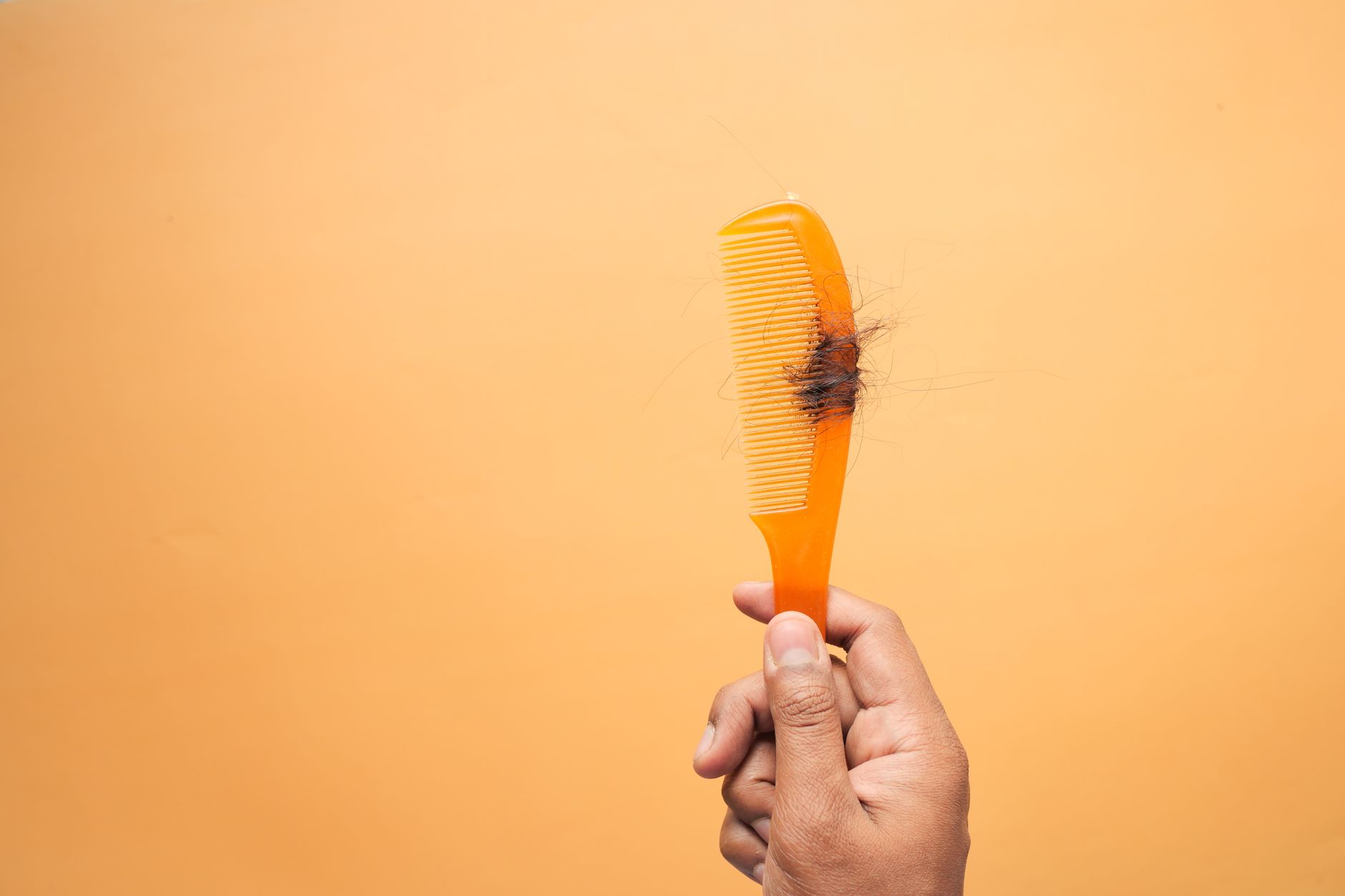

Regular trims and less daily heat, friction, tension, and chemical stress help stop frayed tips from worsening along the hair shaft. Conditioner gives brittle ends more slip, yet it cannot join a split fiber; that split can continue upward like a snag in knit fabric.
Your texture, length, and styling habits shape the routine that protects your ends. The sections below cover damage patterns, trimming, wash-day handling, styling choices, and scalp warning signs.
The Difference Between Split Ends, Breakage, and Shedding
Loose full-length strands in your brush point to shedding, while short snapped pieces near your sink, shoulders, or floor point to fiber damage. Hair follows a growth cycle, so some shedding occurs as strands release from the scalp. Breakage happens when a strand snaps before that natural release point.
| Pattern | What you see | What it suggests |
|---|---|---|
| Split ends | Forked, feathered, or pale-looking tips | Damage at the oldest part of your hair shaft |
| Breakage | Short uneven strands and frizz through the length | Stress from handling, heat, tension, or chemical processing |
| Shedding | Long strands with a tiny bulb at one end | Hair released from the scalp growth cycle |
Damage location changes your next move
Forked tips, tiny white dots, and thin-looking ends point to wear in the bottom few inches. Trim that worn area, then look for the habit causing the friction. Breakage near your crown, hairline, or nape points more directly to tight styling, rough brushing, or repeated contact with clothing.
That distinction keeps you from treating every loose strand as a scalp concern. Your next step depends on the pattern: damaged ends need removal, while short snapped strands call for less tension and gentler handling.
That gentler approach matters because surface wear leaves each strand less able to withstand routine friction.
Cuticle Damage Turns Everyday Handling Into Breakage
Each strand has an outer hair cuticle made of overlapping scales, much like roof shingles. Heat, dryness, friction, chemical processing, and repeated pulling can lift or chip those scales. Once the surface turns rough, your hair catches against comb teeth, towels, and neighboring strands.
Rough cuticles create a snag-and-snap cycle
A raised cuticle creates tangles, and tangles invite force. Flat irons, curling irons, and hot blow dryers can roughen the cuticle through repeated high-temperature contact. Bleaching, relaxing, and perming also alter the hair shaft, leaving it less able to handle firm brushing or tight elastic bands.
For example, a bleached section can feel fine after a salon visit yet snap weeks later during rushed detangling. The chemical service did not act alone. Your rough towel drying, daily heat, and dry brushing can add small injuries until a fragile section gives way.
Wet hair stretches more readily than dry hair. Pulling apart a soaked tangle can turn that stretch into a break, so keep tension low until your hair has more slip.
Elasticity has a limit
Healthy elasticity lets a damp strand stretch modestly and return without snapping. Brittle hair can break with little stretch, while overly softened hair can stretch too far and feel gummy. Your styling routine needs to respect both signals rather than forcing a comb through resistance.
Cuticle damage also explains why a slick product can improve appearance without restoring structure. That limit matters because a divided tip still needs to be cut away before the split travels farther up the strand.
Trimming Removes Existing Splits Before They Travel
Scissors remove damaged material; jars and bottles do not. Conditioners, oils, and repair treatments can coat rough ends and improve combing, but they cannot permanently fuse a split end into a solid hair fiber. Visible fraying calls for a trim.
Trim according to the condition of your ends
A fixed calendar schedule does not fit every head of hair. Your need for regular trims depends on visible splits, increased tangling, frequent heat styling, chemical processing, and how quickly the bottom edge becomes sparse. Someone who air-dries and wears low-manipulation styles may need less removed than someone who heat-styles several times each week.
Ask your stylist to remove the translucent or forked section rather than cutting a standard amount without checking your ends. That approach preserves retained length because weak fibers leave before their splits climb higher.
How often to trim split ends comes down to what your ends show you. New forks, roughness, white dots, a thin perimeter, and knots near the bottom edge all point to a need for closer inspection.
Repair products have a narrower job
Bond-focused formulas such as Olaplex No. 3 Hair Perfector and K18 Leave-In Molecular Repair Hair Mask target the feel and resilience of chemically stressed hair. You can add products like these to your routine, but neither changes the fact that a divided tip needs cutting.
Hydrolyzed proteins can form a temporary film around the hair shaft, while fatty alcohols and conditioning agents add lubrication. Your strands can feel less rough after use, yet repeated protein-heavy formulas leave some hair stiff. Alternate products based on how your hair feels instead of layering every repair formula at once.
Wash-Day Habits Protect the Most Vulnerable Hair
Washing, drying, and detangling place stress on hair at its most flexible stage. Water swells the hair shaft, and a rough cuticle becomes easier to snag as wet strands rub together. Conditioner adds lubrication, so tangles separate with less force.
Slip matters more than speed
Work through knots in small sections instead of dragging a brush from roots to ends. Start at the tips, loosen the lowest knot, and move upward in short passes. Your fingers can find a tight knot before a wide-tooth comb catches and tears through it.
- Condition before combing: Apply rinse-out conditioner or leave-in conditioner where your hair tangles most.
- Divide dense hair: Use four to eight sections so each knot receives less pulling.
- Hold above knots: Brace the strand near the tangle to keep force away from your scalp.
- Choose wide teeth: A wide-tooth comb moves through curls and waves with less snagging.
- Pause at resistance: Add more slip and separate the knot with fingertips rather than yanking.
This is one of the most practical ways to reduce hair breakage because a tangle concentrates force in one small spot. Your hand above the knot absorbs that pull instead of leaving the full strain on a fragile strand.
Dry with pressure, not friction
Rubbing wet hair with a bath towel twists fibers against coarse loops and lifts the cuticle. Blot excess water, then wrap your length in a soft microfiber towel or cotton T-shirt for a few minutes. Your hair should feel damp, not scraped, before you add leave-in product or style.
Deep conditioner fits here when your ends stay dry or rough after ordinary conditioner. A richer formula can improve softness and detangling, but it cannot stand in for cutting already split fibers. Gentle wash-day handling protects the trim you just received.
Styling and Processing Choices Shape Cumulative Damage
A single blow-dry rarely explains a full pattern of damage. Wear builds through repeated passes on the same section, especially where your ends have already lost smoothness. Lower temperature, fewer passes, and a heat protectant reduce the thermal load on a vulnerable hair shaft.
Heat control protects length
| Styling habit | Higher-damage pattern | Lower-stress adjustment |
|---|---|---|
| Blow drying | Hot airflow held close to damp ends | Use a concentrator, keep the dryer moving, and dry in sections |
| Flat ironing | Multiple slow passes on one section | Dry hair fully, use heat protectant, and limit passes |
| Curling tools | High heat on fine ends for long holds | Use the lowest setting that forms the style |
Heat protectant does not make high heat harmless. It forms a protective film and can reduce moisture loss during styling, yet your tool setting and number of passes still shape the result. Dry hair fully before a flat iron touches it, since sizzling hair signals water leaving the fiber.
For your heat routine, reserve hot tools for chosen styling days rather than reaching for them after every wash. That spacing gives your ends fewer high-temperature exposures across the month.
Chemical services need spacing and restraint
Bleach lifts pigment by altering hair structure, while relaxers and perms reshape bonds in the shaft. Overlapping those services onto previously processed length raises the chance of breakage. Your colorist needs to know about prior bleach, home color, straighteners, and heat habits before another service begins.
Protective hairstyles work only while they reduce manipulation without creating steady strain. Braids, twists, extensions, or slick buns that cause pain, scalp tenderness, headaches, or edge breakage are too tight. Loosen or remove the style rather than waiting for soreness to fade.
Once tight styles or repeated processing cause symptoms, a fixed schedule is less useful than responding to changing hair condition.
An Adjustable Maintenance Plan Keeps Ends From Falling Behind
Small habits protect length better than a dramatic repair session after damage appears. A hair care routine for damaged hair should limit friction, keep ends conditioned, and space out high-stress styling. Your new growth has a better chance to reach its desired length intact under those conditions.
A weekly rhythm keeps stress visible
- Condition each wash: Coat mid-lengths and ends, then detangle with your fingers or a wide-tooth comb.
- Use low-friction drying: Blot with a microfiber towel and avoid twisting damp hair into a tight bun.
- Limit hot tools: Reserve heat styling for selected days and use a heat protectant before drying or ironing.
- Protect overnight: Use a silk pillowcase or smooth bonnet to reduce rubbing against rough cotton.
- Check ends weekly: Look for forks, white dots, roughness, new tangles, and short snapped pieces.
Your plan needs a change as soon as those signs become more frequent. More tangles near the bottom, a frizzy perimeter, or a thin see-through edge calls for a trim and a close look at recent heat, chemical processing, towel use, and styling tension.
Sleeping protection matters because your hair rubs against the pillow for hours at a time. A smooth bonnet or silk pillowcase reduces that repeated contact, while a loose style keeps your roots and edges under less strain.
Persistent breakage deserves a closer look
Sudden heavy breakage, bald patches, scalp burning, scaling, tenderness, or itching deserves medical attention. These signs can point beyond routine hair-shaft damage. That approach aligns with guidance from the American Academy of Dermatology on sudden hair loss and scalp symptoms.
A dermatologist can separate hair-shaft damage from scalp conditions or internal causes that need different care. Your stylist can also spot mechanical sources, such as a tight extension installation or repeated overlap during color work.
What to Remember
Longer-looking hair comes from keeping the hair you already have from snapping off. Cut away splits, condition for slip, handle wet strands gently, lower heat exposure, and reject styles that pull at your scalp. Those choices work together to prevent split ends and hair breakage without pretending damaged ends can be fused back into place.
FAQ
Can split ends be repaired without cutting them?
No product permanently joins a divided hair tip into one intact fiber. Your conditioner, serum, or bond-focused treatment can smooth the surface and reduce snagging, but trimming removes the damaged section that could continue splitting upward.
What causes hair to break and develop split ends?
Heat, dry detangling, rough towel rubbing, tight styles, bleaching, relaxing, perming, and repeated friction can damage the hair cuticle. Once your surface layer turns rough, strands tangle more easily and can snap during brushing or styling.
How often should you trim your hair to prevent split ends?
Trim based on visible fraying, thinning ends, increased knots, and your exposure to heat or chemical processing rather than following a rigid date. Your stylist can remove the damaged portion while keeping as much healthy length as possible.
Does heat styling cause hair breakage?
High heat can weaken the hair shaft, especially through repeated flat-iron passes or hot airflow on dry ends. You reduce stress by using a heat protectant, choosing a lower setting, working in small sections, and limiting repeat passes.
What ingredients help strengthen damaged hair?
Conditioning agents, fatty alcohols, ceramides, and hydrolyzed proteins can improve softness, lubrication, and temporary surface strength. Your hair still needs a balanced routine because heavy protein use can leave some strands rigid or rough.
How can you detangle hair without causing breakage?
Apply conditioner or leave-in conditioner, separate your hair into sections, and start at the ends with fingers or a wide-tooth comb. Hold the strand above each knot so your scalp and fragile lengths do not absorb the full pull.