
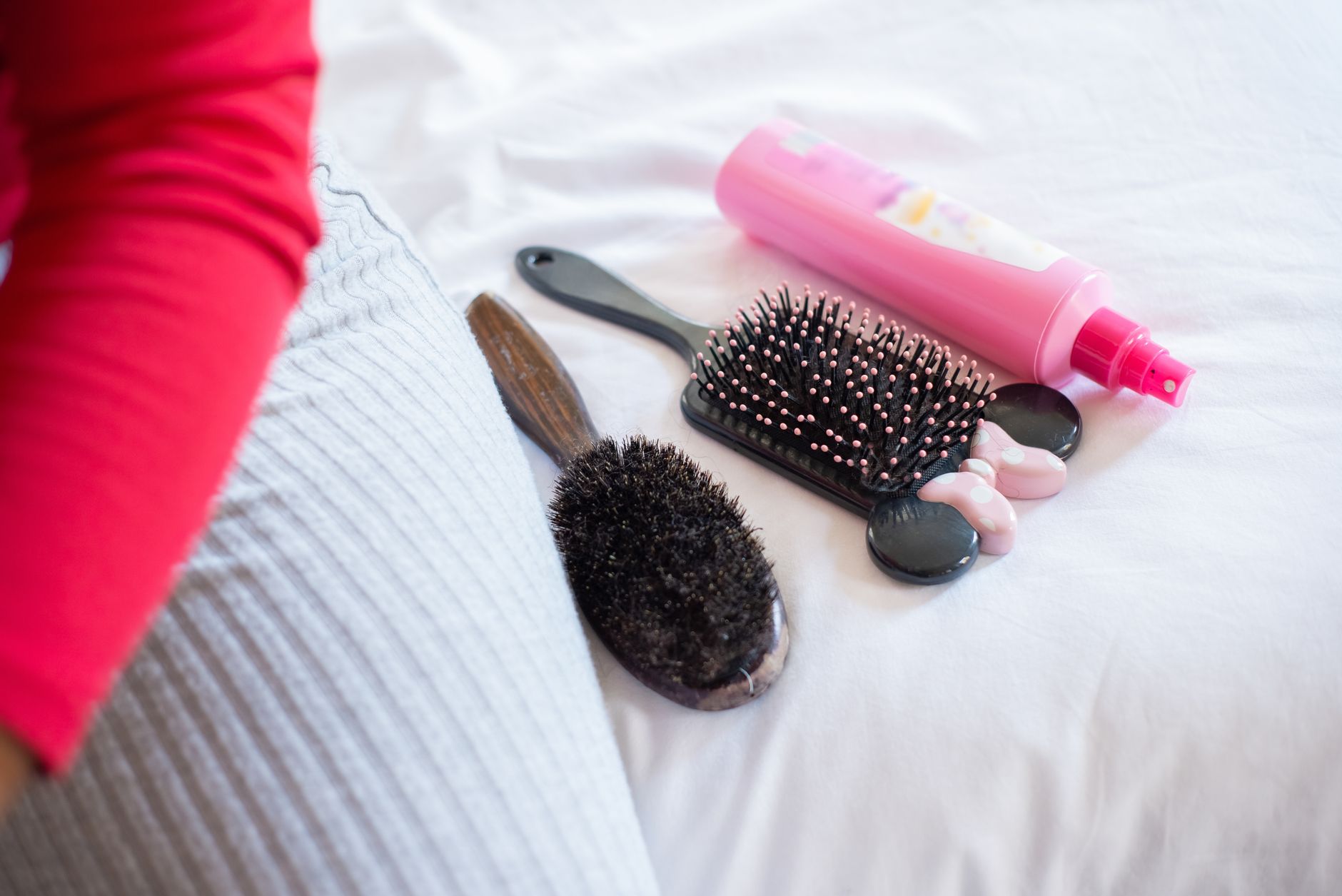

Bristle flex, brush shape, and row spacing should match your texture, density, length, styling goal, and scalp comfort. Fine strands register each tug, while dense curls need reach without force. The right match lowers drag and gives your hair the finish you want.
This practical explanation gives you a clear path through hair traits, bristles, shapes, wet-hair handling, and daily styling choices without turning a simple tool choice into a crowded routine.
The Hair Traits Behind a Good Brush Match
Texture Sets the Starting Point
Hair type and texture set the baseline because straight strands, waves, curls, and coils react differently to friction. Straight hair can show oil and static quickly, while wavy hair needs smoothing that does not flatten its bend. Curly and coily hair needs slip, sectioning, and wider spaces that keep curl groups from pulling apart.
Density changes the depth a tool must reach. Your brush needs longer pins or wider spacing for a full, thick head of hair, while fine or thinning hair benefits from softer contact that does not scrape the scalp or pull at sparse areas.
| Your hair trait | What the brush needs to do | A useful starting point |
|---|---|---|
| Fine or fragile strands | Limit tension and reduce snagging | A flexible detangling brush or soft paddle brush |
| Thick or coarse density | Reach below the surface layer | Long nylon pins with spaced rows |
| Long straight or wavy lengths | Smooth a broad section at once | A paddle brush or mixed-bristle brush |
| Curls or coils | Move through knots without breaking curl groups | A wide-tooth comb or flexible detangling brush |
Your Styling Job Narrows the Field
A brush for root lift behaves differently from one for knot removal. Gentle detangling calls for bendable bristles, while blow-drying needs grip and controlled tension. Your intended finish decides which tradeoff fits the task.
Watch the result after several passes. Pulling, snapped hairs, scalp soreness, static, frizz, or a clump of shed strands near the brush base point to more tension than your hair can handle comfortably.
Because tolerance for pull differs by strand strength and scalp sensitivity, bristle design determines how that force is delivered.
Fine, damaged, bleached, or easily tangled hair needs a soft, flexible baseline. Keep firm pins and strong grip for dense hair that needs styling control and handles resistance without scalp discomfort.
Bristles Control Grip, Tension, and Scalp Feel
That tension begins at the bristle level. Each pin either slides around a knot, catches it, spreads scalp oils, or pulls against your scalp. A bristle pattern that feels smooth on dry hair can feel harsh on damp, stretched strands.
| Bristle type | How it behaves in your hair | Where it fits |
|---|---|---|
| Boar bristle | Moves natural oils from your scalp through dry lengths | Straight or wavy hair needing surface polish |
| Nylon bristle | Grips firmly and reaches deeper through density | Thick hair or controlled blow-drying |
| Mixed bristle | Pairs smoothing with deeper reach | Medium-to-thick hair needing control and finish |
| Flexible detangling bristle | Bends around resistance rather than forcing through it | Knots, fragile ends, and damp detangling |
A boar bristle brush suits dry straight or wavy hair because natural bristles move scalp oils along the hair shaft. Dense coils can stop a boar brush near the surface, leaving lower layers untouched and creating extra tugging.
Nylon bristles give your hands more grip, which holds a section taut during heat styling. Stiff or sharp-tipped pins can aggravate scalp sensitivity, so light pressure matters, especially during soreness or irritation.
Mixed Bristles Balance Reach and Polish
Mixed-bristle brushes place nylon pins among natural bristles. You get deeper reach from nylon and a smoother surface from the softer bristle layer, making this style useful for medium-to-thick straight or wavy lengths.
Brand names describe brush designs rather than a universal match. Mason Pearson is associated with boar and mixed-bristle styling, while Denman brushes have firm rows that curl routines can use for clumping and definition. Your section size and pressure still shape the result.
Brush Shapes Serve Different Styling Jobs
Bristles set the feel, but brush shape sets the movement. A broad flat surface smooths a wide section, while a barrel bends hair around itself and directs tension toward lift, volume, or a curved finish.
| Brush shape | Your main use | Result on your hair |
|---|---|---|
| Paddle brush | Everyday detangling and smoothing | Sleeker long straight or wavy lengths |
| Small round brush | Short layers and close-to-root styling | Tighter bends and focused lift |
| Large round brush | Longer sections during blow-drying | Soft waves, volume, and a smooth finish |
| Vent brush | Rough-dry stage | Faster airflow with less shaping tension |
A paddle brush covers a wide section, making it useful for long straight or wavy hair. Broad strokes smooth the outer layer with less repeated friction than short, hurried brushing across the same area.
Round brushes shape hair during blow-drying. Smaller barrels form tighter curves and suit short layers near the roots, while larger barrels form looser movement through longer sections.
A vent brush has openings that let hot air pass through the brush. It speeds rough drying with less tension than a round brush, but it will not give your hair the same shaped blowout finish.
Matching Brushes to Fine, Thick, Straight, and Textured Hair
Fine and Thick Hair Need Different Force
Fine hair responds poorly to hard pulling because each strand has less bulk to absorb drag. Your best brush for fine hair is a soft paddle brush or flexible detangler used with light pressure, especially around fragile ends and thinner areas.
Thick, coarse, or long hair needs pins that reach below the outer layer. Look for sturdy nylon or mixed bristles with enough spacing that the brush separates sections instead of skating over the surface and catching underneath.
Texture Changes the Dry-Brushing Rules
Straight and wavy hair can handle a dry paddle brush for daily smoothing. A boar bristle brush or mixed-bristle brush moves scalp oils through mid-lengths and ends, though repeated strokes can flatten fine roots.
Curly and coily hair needs a different rhythm. Detangle your hair in smaller sections with conditioner or another product that adds slip, then begin at the ends and move upward toward the roots.
- Fine, fragile hair: Choose flexible bristles and short strokes so your ends do not stretch and snap.
- Dense, coarse hair: Pick long pins that reach your roots without repeated surface brushing.
- Straight, oily roots: Use boar bristles on dry hair to move natural oils through the lengths.
- Wavy hair: Use a paddle brush for smoothness, then limit brushing after your wave pattern is set.
- Curly or coily hair: Use a wide-tooth comb or detangling brush with slip to preserve your curl pattern.
For example, a Tangle Teezer or Wet Brush style with flexible pins suits a damp knot-removal routine. An Olivia Garden round brush suits blowout work, while a Goody paddle brush can handle a simple dry smoothing pass.
That match matters most on wet hair, when knots and swelling can make an otherwise suitable brush feel too aggressive.
Wet-Hair Detangling Without Unnecessary Breakage
Water changes how strands behave. Wet hair stretches farther before it breaks, yet that added stretch makes forceful brushing risky because a pulled strand can weaken or snap instead of sliding free.
Work From the Ends Upward
- Add slip: Work conditioner, leave-in product, or detangling spray through damp hair before combing.
- Divide sections: Split thick, curly, or coily hair into manageable parts so the tool meets fewer knots.
- Loosen ends: Begin below the knot and clear the bottom few inches before moving higher.
- Hold above knots: Grip the section near the tangle so your scalp does not take the full pull.
- Pause for snags: Use your fingers on stubborn knots rather than forcing a brush through resistance.
A wide-tooth comb gives wet strands room to move, while a flexible detangling brush bends with resistance. Your choice comes down to density and curl pattern: broader teeth suit larger curl groups, while flexible bristles work through finer tangles near the ends.
How to brush wet hair without breakage comes down to slip, section size, and patience. A brush that glides after conditioner has reached the section is less likely to pull against your scalp or stretch a knot into a weak point.
Dry brushing can separate curl clumps and leave a cloud of frizz. Keep it for styles that need brushed-out texture rather than a daily curl-definition routine.
A Practical Brush Routine and Final Selection Check
No single tool handles every task equally well. Your detangling tool should reduce resistance, while your finishing brush should match the look you want, whether that means smooth lengths, root lift, or defined curls.
A Two-Tool Routine Covers Daily Needs
- Begin with detangling: Keep a wide-tooth comb or flexible brush for wet knots and fragile ends.
- Add a finisher: Choose a paddle, round, or mixed-bristle brush for your dry styling goal.
- Check scalp comfort: Stop using a brush that leaves your scalp tender after a few passes.
- Clear trapped hair: Remove shed strands after each use so bristles keep their spacing and flex.
- Wash product residue: Clean the cushion and bristles with mild shampoo, then air-dry the brush bristle-side down.
- Discard rough tools: Retire brushes with bent pins, cracked tips, or rough bristles that catch your hair.
Run a new brush through one small section before adding it to your routine. Manageable resistance, an unstressed scalp, and fewer repeat passes show that the brush fits your hair instead of fighting it.
How to choose the right hairbrush for your hair type becomes clearer once you separate detangling from styling. Your hair does not need a drawer full of tools, but it benefits from a brush matched to each real job.
Final Check
Your brush should move with your hair rather than demand that your hair submit to it. Start with texture, density, current damage, and scalp comfort, then match bristle grip and brush shape to one task at a time.
A gentle detangler plus a finishing brush covers more ground than one stiff tool forced into every part of your routine. That small shift can reduce pulling, preserve curl groups, and make daily styling feel calmer on your scalp.
FAQ
Which hairbrush is best for my hair type?
Your right match depends on texture, density, length, and styling goal. Fine or damaged hair benefits from flexible bristles, thick hair needs longer pins with grip, and curly or coily hair responds well to sectioned detangling with a wide-tooth comb or flexible brush.
What type of hairbrush should I use for fine or thinning hair?
Fine or thinning hair needs soft contact and low tension. Choose a flexible detangling brush or soft paddle brush, then brush in short sections with light pressure so your scalp and fragile ends do not take repeated pulling.
What is the best brush for thick, coarse, or long hair?
Long nylon pins or a mixed-bristle brush with spaced rows help detangle dense strands without excessive pulling. Those pins reach through the outer layer and separate sections, while closely packed short bristles can catch near the surface.
Should I use a boar bristle or nylon brush?
Use a boar bristle brush on dry straight or wavy hair for oil distribution and a polished surface. Choose nylon for thick hair or blow-drying because nylon grips sections more firmly, though sensitive scalps need rounded, gentler pin tips.
What brush should I use for curly or textured hair?
Your hairbrush for curly hair should have wide spacing or flexible bristles and should move through hair in sections with conditioner or slip. A wide-tooth comb suits larger curl groups, while flexible detangling brushes help with finer knots near your ends.
Is it better to brush hair wet or dry?
Dry hair suits smoothing straight and wavy styles, while damp hair with conditioner is a practical time to detangle curls and coils. Your wet strands stretch easily, so use a wide-tooth comb or flexible brush and avoid forceful repeat strokes.